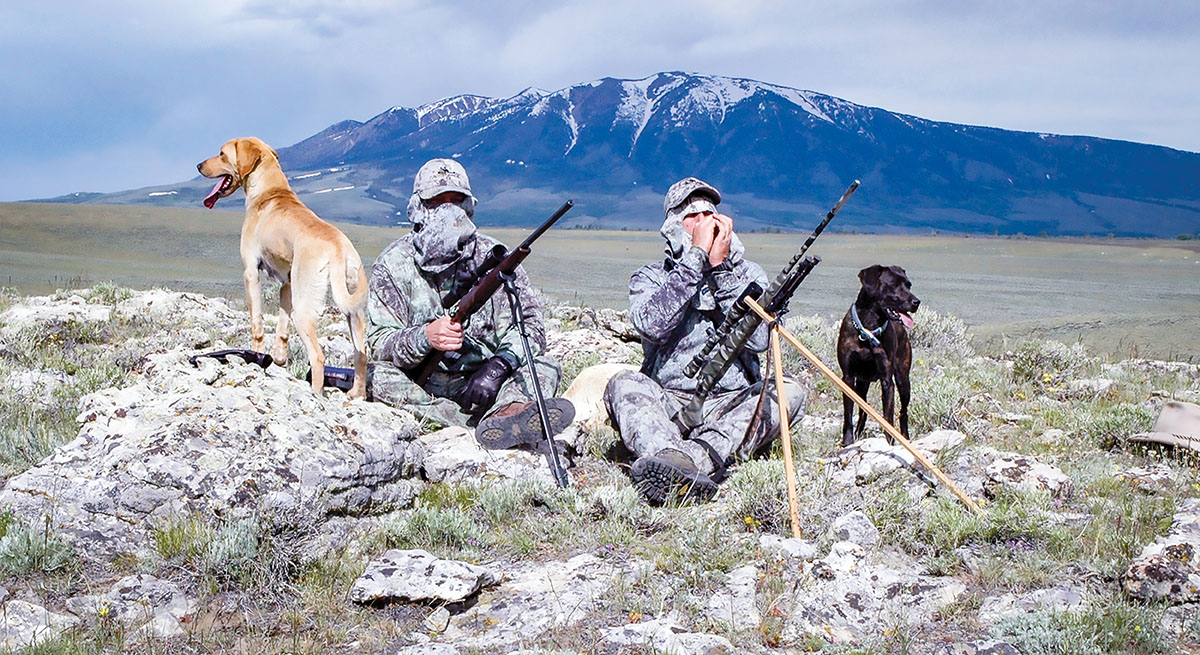
Layne and a friend with his two highly trained tolling dogs. The dogs stay put until the shooter is convinced no coyote is coming to the call.
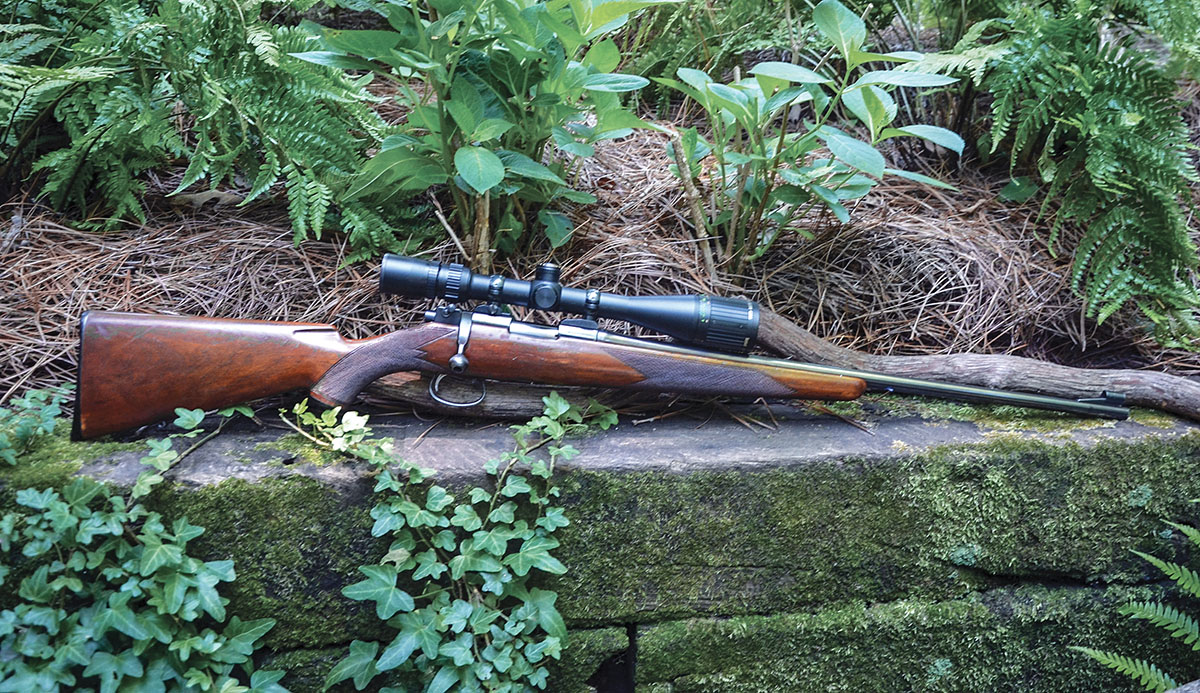
While in college, Layne bought this extremely accurate Sako L46 rifle in 218 Bee from a classmate, and he has owned it longer than any other varmint rifle chambered for a centerfire cartridge. This rifle has had many different scopes through the years, with a Bushnell Elite 4200 in 4-16x the latest.
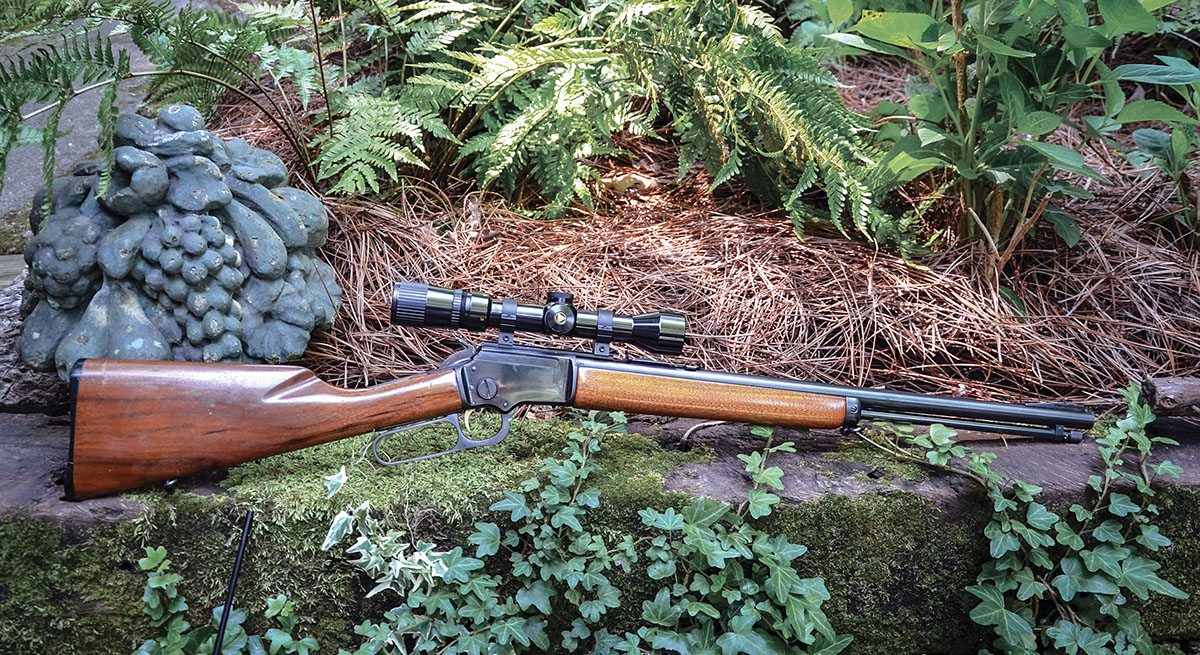
Layne’s dad put him in charge of varmint control with this Marlin 39A Mountie. Originally equipped with a Marlin Micro-Vue 4X scope with a 3⁄4-inch tube, it now has a 2-8x Bausch & Lomb Balvar.
Over an entire summer during my grade school days, I helped a neighboring farmer clear several acres of bottom land that he needed for planting crops. Part of the money earned went toward clothing and books for the upcoming school year, and the rest bought a brand-new Marlin Model 39A Mountie from an uncle who sold guns out of his automotive parts store. The retail price was $89.25, and a
Marlin Micro-Vue 4X scope with a 3⁄4-inch tube increased the tab to $104.20. A “generous” favorite nephew discount brought the price down to $96, and five boxes of
Remington High Speed 22 Long Rifle hollowpoints set me back another $2.20. Corn was an important money crop to our family, and immediately after a field had been planted, mobs of crows would descend and become quite efficient at scratching up and devouring the seeds. Dad put me in charge of varmint control, and when the crows were feeding in a field bordered by trees and brush, I often managed to stalk close enough to blast one with my Marlin. A solid hit with a 37-grain hollowpoint never failed to send a black bandit to that big rookery in the sky. Great success did not last long.
Crows are extremely intelligent birds. They soon avoided feeding within range of my
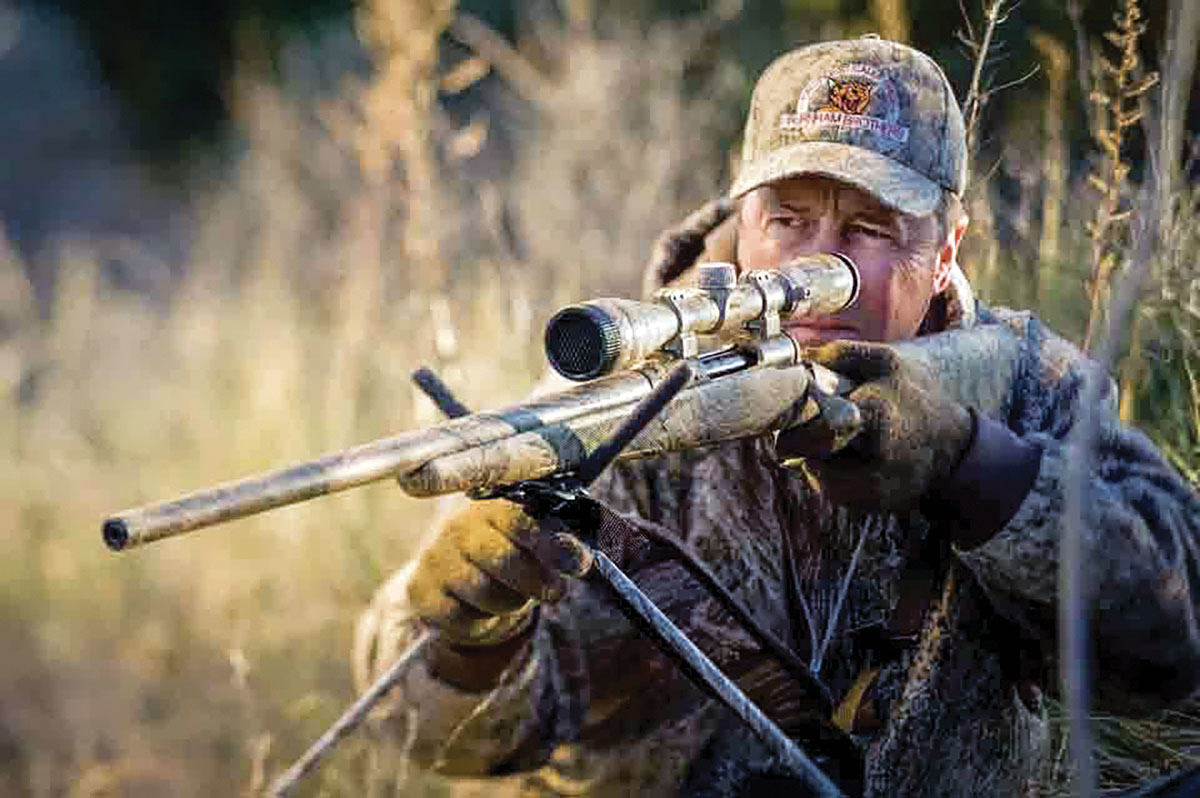
Gary Roberson grew up on a ranch in the Brush Country of south Texas at a time when coyotes had the bad habit of dining on calves, goats and chickens. During his youth, he learned the art of trapping the intelligent critters. At the time, calling them in was unheard of, and when he purchased a call from Herter’s, ranchers in the area scolded him for wasting his money. The first critter he called in was a gray fox, and the rest is history.
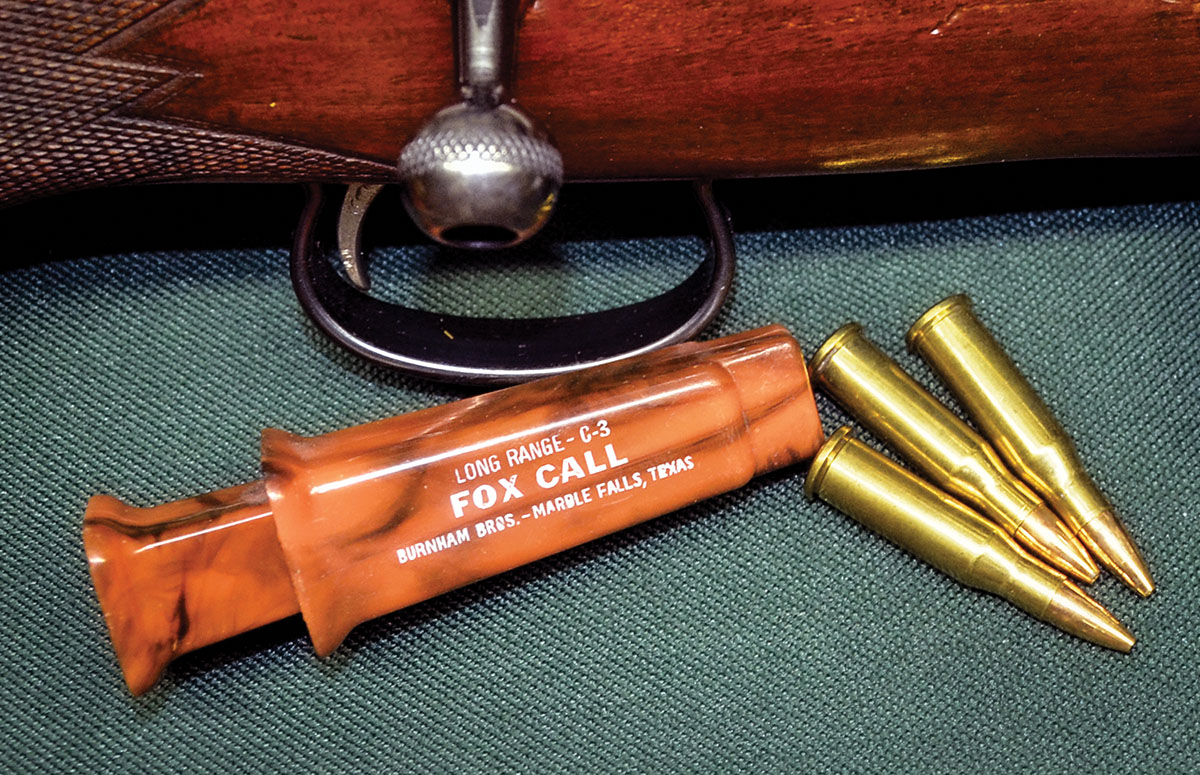
Layne purchased this Model C-3 Long Range Fox Call from the Burnham Brothers who pioneered the art of varmint calling. Through the decades, the call has accompanied him on big-game hunts all over America and in many foreign countries.
Marlin Mountie. Dad eventually surprised me with a Savage Model 219 break-action rifle in 22 Hornet with a Weaver K6 scope. While it did extend my kill distance for a while, those rascally crows eventually began feeding beyond its range as well. In those days, every country boy in America had a 650-page catalog from Herter’s of Waseca, Minnesota. Several pages were filled with a variety of mouth calls guaranteed to coax into gun range everything from ducks, geese and turkey gobblers to bobcats, cougars and African lions. I still have one of those catalogs, and there on page 25 is “Herter’s Famous Perfection No. 204” crow call for the princely sum of $2 and that included “The complete Crow Calling and Hunting Manual.” The combination worked as advertised. Before long, my Iver Johnson 410 shotgun was tumbling crows from the sky. So began many wonderful, fun-filled years of calling various varmints. Before leaving the subject of Herter’s, I must add that on page 26 was a photo of the Model 88 Transistorized Electronic Hi-Fidelity Game Call Phonograph with Speaker that played 45 RPM vinyl records. At $89.77, it was miles beyond my budget.
A large bulletin board in the college I later attended was there for students to post various messages, including items for sale. One day, I was surprised to see a Sako rifle in 218 Bee listed. Imported by Firearms International beginning in 1949, the L46 was the first truly successful centerfire sporting rifle to be designed and built at the Sako factory in Rihimaiki, Finland. It was also chambered for the 22 Hornet, 7x33mm Sako, 25-20 Winchester and 32-20 Winchester, with most rifles chambered for the latter two cartridges shipped to Australia. I do not recall how I managed to scrape together the asking price, but the Sako L46 in 218 Bee became my first bolt-action varmint rifle. I was on the school rifle team, and the coach allowed me to keep the rifle in one of the lockers of our indoor range, where we practiced with Winchester 52 and Remington 40X target rifles, along with a generous supply of standard velocity 22 Long Rifle ammunition.
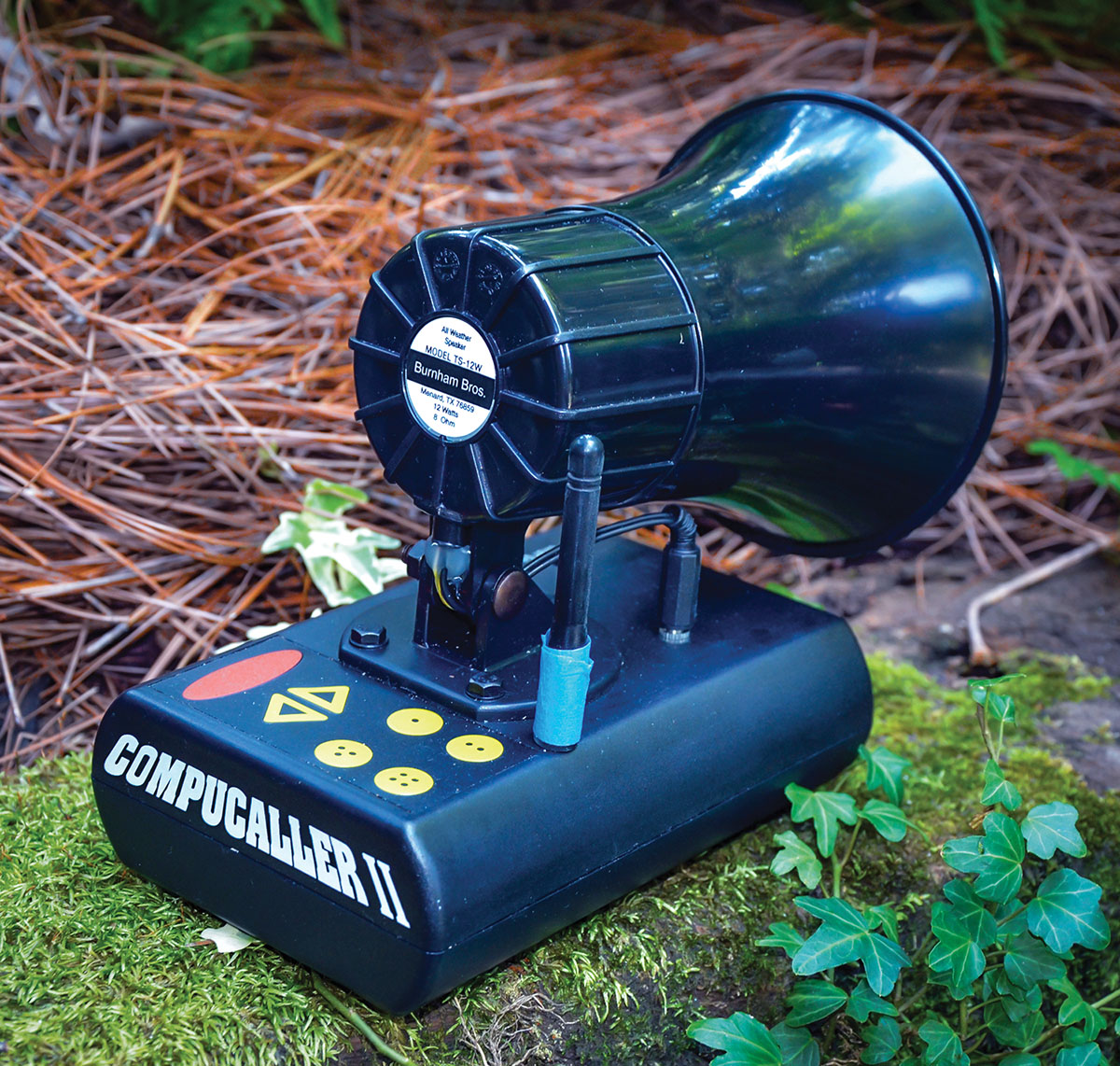
Soon after Gary Roberson purchased the Burnham Brothers company in 1991, he introduced the Compucaller II and Layne added one of the first built to his battery. It came with a charger, a remote and a soft carry case in a camo pattern. It works as well today as it did 35 years ago.
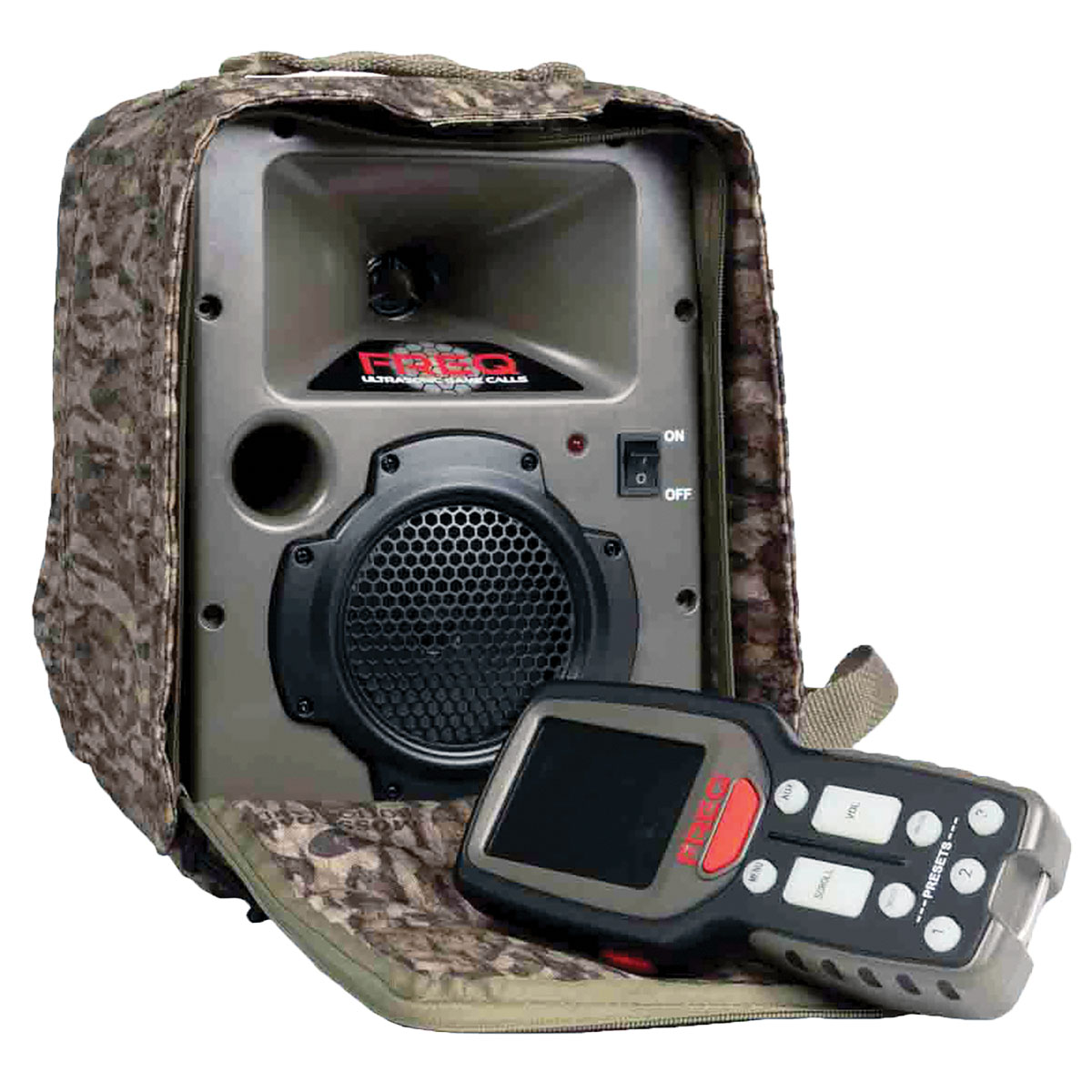
This Ultrasonic Game Caller is the latest from Burnham Brothers of Menard, Texas. A friend has one and swears by it.
In those days, foxes were quite abundant in the country several miles from the dormitory where I stayed, so I ordered a C-3 Long Range Fox Call from Burnham Brothers out in Marble Falls, Texas. Winston and Murry Burnham pioneered the art of varmint calling, and they became quite famous for it. Through the decades, that call has accompanied me on bird hunts and big-game hunts all over America and in many foreign countries, including several on the African continent. I took it along in case one or more types of varmints would be there for the calling, and quite often they were. One of those hunts took place in Old Mexico.
Nick Sisley and I were there to see how effective Remington’s new Heavy Shot was on Gould’s turkey gobblers. He had never experienced the fun of calling in coyotes, so on our final afternoon with only about two hours of daylight left, we did just that. We were using Remington 11-87 turkey guns, his in 12 gauge and mine chambered for the 20-gauge shell. While Heavy Shot proved to be ideal for downing turkey gobblers at surprising distances, it was less than ideal for bumping off coyotes. So, I had asked Nick to wait until one was almost in our laps before shooting. I had pushed air through the old Burnham Brothers call for no more than a minute or two when not one, but two coyotes came loping along side-by-side, headed our way for an easy meal. When they were about 20 yards away, we ended the hunt. I still have that call, and it is quite effective at coaxing in any animal that considers a tormented rabbit a tasty meal. Sad to say, my old friend, Nick Sisley, passed away in February of 2019, about a year after he broke his 100,000th clay target in registered skeet.
Soon after Gary Roberson purchased Burnham Brothers in 1991 and moved the operation to Menard, Texas, he introduced the Compucaller II, and I still have one of the first built. It came with a charger, a remote and a soft carry case in a camouflage pattern. Mine works as well today as it did 35 years ago. Truth be told, the Compucaller does not do a better job of bringing in foxes and coyotes than the old C-3 mouth call, but it can be operated remotely out to 50 yards or so and, under some conditions and circumstances, that can be advantageous. It also offers the advantage of producing sounds other than a squealing cottontail. Years later, Gary introduced his Ultrasonic Game Caller, and a friend who has one swears by it.
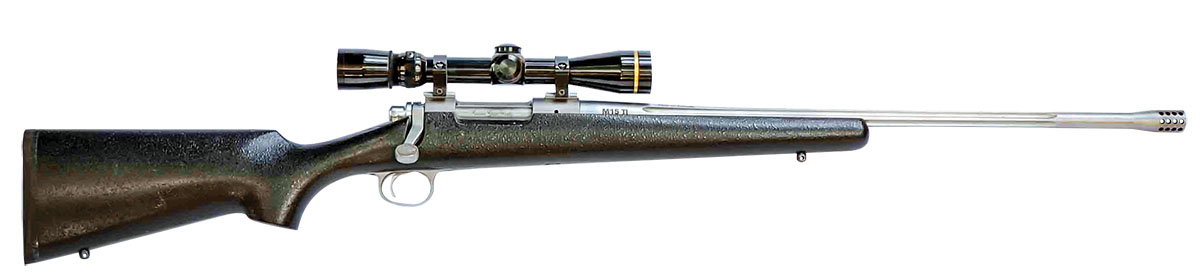
Going after coyotes in big country with tolling dogs can entail many miles of walking, so the next time Layne gives it a try, he will carry this extremely accurate, 6.25-pound M15 Ti rifle in 243 Winchester built many years ago by Ross Spagrud of Prairie Gun Works (now known as PGW Defense Technologies).
Moving forward a few years, while my wife Phyllis and I were hunting bobwhite quail on a large Kansas farm and cattle ranch owned by a friend, our dog bumped a coyote from a brushy ravine. Over dinner that night, I mentioned it to him, and he said they could be a serious problem during spring calving season. When needed, he and other ranchers in the area would contact several guys who owned trained greyhounds. The dogs rode in boxes with spring-loaded doors on their trucks. The guys would drive around, and when a coyote was spotted, a pull on a rope released the hounds. In open country, greyhounds can reach speeds as high as 45 miles per hour, and they can maintain that for a very long way. A mature coyote in good shape can come close to matching that in a short burst, but it tires quickly, and the race eventually ends with one less calf killer on the loose. While we most often think of greyhounds as racing dogs, they actually were originally bred for the sport of coursing, which means to chase game by sight rather than by scent as most hunting dogs do. I will add that drastically reducing coyote numbers has been found to be temporary because they are blessed with a mechanism that deals with population changes through natural adjustments in birth rate. In times of dense population and/or scarcity of food, the average litter produced by a female is three pups. When populations are low and/or food is abundant, the average litter increases to eight pups.
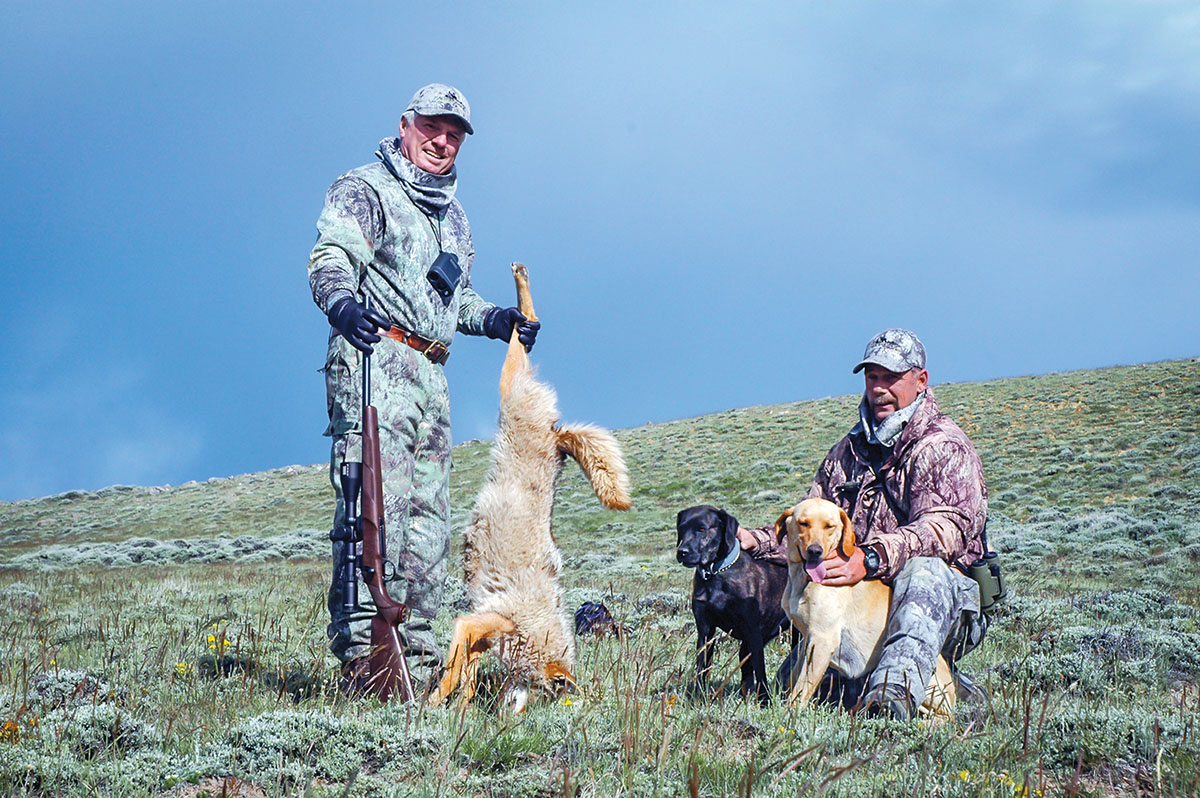
This coyote was so intent on chasing the dogs it never even noticed the two hunters. When both dogs suddenly veered to the right at about 30 yards, Layne had a clear shot and rolled the coyote with one shot from his Sako rifle in 22-250.
I have always loved dogs and received a beagle puppy of my own at a very young age. Back then, hunting cottontail rabbits was extremely popular, and my father raised, trained and sold beagles. Hunters from all over the Southeast came to our farm to buy them. Dogs play important roles in other types of hunts. We have an abundance of whitetail deer, some of which reside in swamps containing brush and brambles so dense they can be impossible to bag. Slow-moving hounds are trained to push a buck into the edge of open country. Hounds are also used to take black bears in heavily forested and extremely rugged mountain terrain. Many years ago, I hunted with a group of farmers who did just that each year and used a Marlin 336 in 35 Remington to bag a bruin weighing 411 pounds on a cotton scale. Out west, hunters often take cougars with the aid of trained hounds.
I mention all of this to bring up the fact that using a trained dog when hunting coyotes in a rather unusual way is great fun and it can be quite productive as well. The coyote is a territorial animal, and in addition to becoming rather upset when spotting another canine in its territory, its natural response is to chase the intruder into another county. Just any dog will not do. Training begins when gradually conditioning a puppy to the noise of gunfire. A friend of mine begins the program with a Daisy Red Ryder BB gun he received as a kid. Once the puppy is no longer bothered by its noise, a Remington Nylon 66 in 22 Long Rifle is used. After graduating from the rimfire, a rifle in 223 Remington is used. As the dog matures, it is taught to obey various commands. If a coyote is coming to a call but stops out of rifle range, the dog is instructed to move around a bit but to remain by the shooter’s side. If that does not work, the dog is told to advance a bit toward the coyote, and that usually brings it on in. In other words, the dog is trained to serve as a decoy.
Then we have the tolling dog. After the shooter sets up, the pooch stays put until the shooter is convinced no coyote is coming to the call. If that proves to be nonproductive, the dog is instructed to roam the country in all directions until it is spotted by a coyote. Rather than attempting to engage it, the dog quickly heads back toward the shooter. The dog is a bigger animal, so the coyote is content with just pushing it along rather than actually making contact. Once the two are fairly close to the shooter, the dog suddenly stops and so does the coyote. This gives the shooter an opportunity to take a shot at a still target. The coyote’s sense of caution becomes quite diminished. A friend told of taking a shooter armed with an AR-15 on one of those hunts. As his dog was bringing in a coyote, they got within about 50 yards and then suddenly veered to the left without slowing down. The AR-15 missed three times, and the coyote was so intent on chasing the dog, it never seemed to notice bullets kicking up around it.
A personal experience is even more interesting. While on a hunt in extremely open country with a good friend and his pair of tollers, we first set up and called off-and-on for about an hour. Nothing came in, so he verbally commanded the two dogs to “search.” We eventually lost sight of them in our binoculars. He and I were sitting about 10 yards apart when one of the dogs suddenly appeared from behind and zipped between us. It was quickly followed by the second dog, and that dog was quickly followed by the coyote. The coyote was so intent on chasing the dogs it never even noticed us. When both dogs suddenly veered to my right at about 30 yards, I had a clear shot and rolled the coyote with my first shot. Wagging tails and big smiles on the faces of the two hounds were a good indication of how much they enjoyed their jobs.
My original plan was to take a rifle in 223 Remington, but my host recommended something a bit heavier, so I went with a Sako Model 85 in 22-250. I was told that in the presence of a dog, a coyote’s adrenaline is off the charts, and it can take far more killing than when undisturbed. He carried a rifle in 6mm Remington. A great deal of walking can be involved, so when I return, a M15 Ti rifle in 243 Winchester built by Ross Spagrud of Prairie Gun Works (now known as PGW Defense Technologies) around a titanium receiver will be my coyote medicine. Extremely accurate, it weighs only 6.25 pounds with a scope. A few years back, I took it to the snow-covered Southern Alps of New Zealand where it bagged chamois and Himalayan Thar, each falling to a single Nosler 95-grain Partition.