Login


Wolfe Publishing Group
    Menu

    Les Baer Custom Super Varmint AR-15 in 204 Ruger

    Half-Inch Accuracy at 4,000 FPS


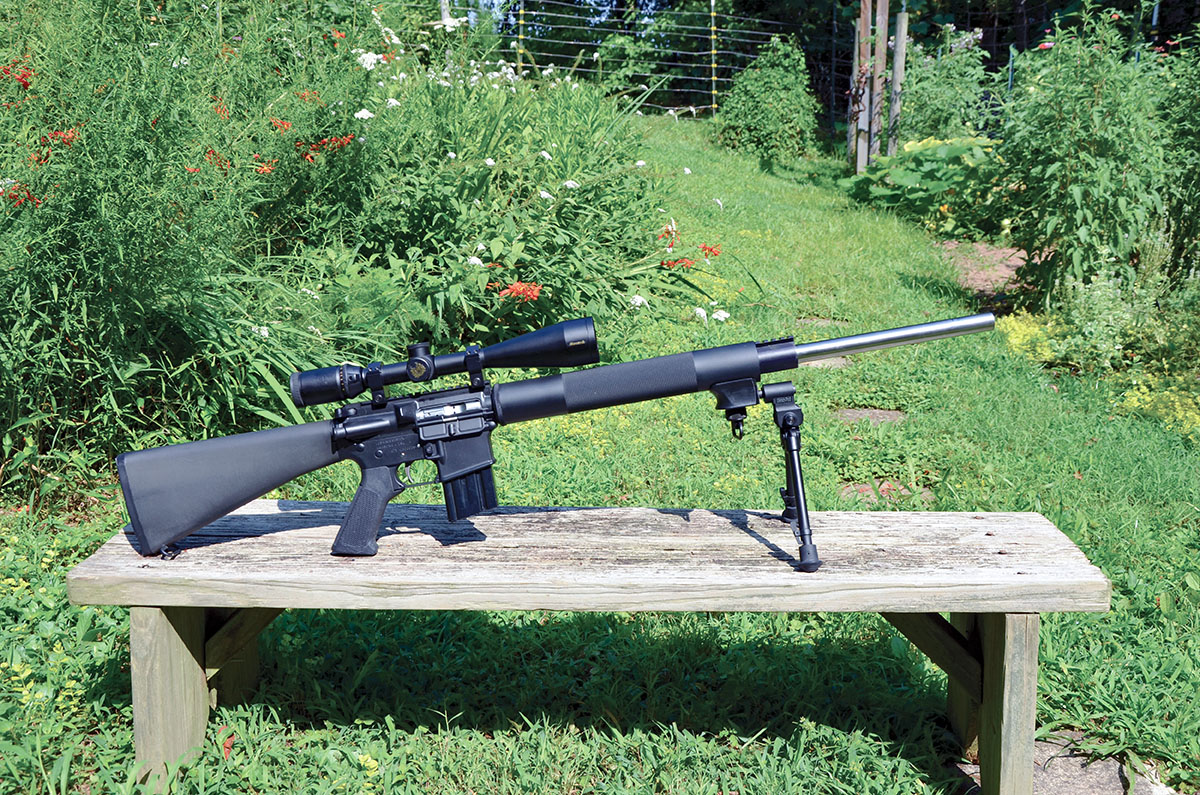
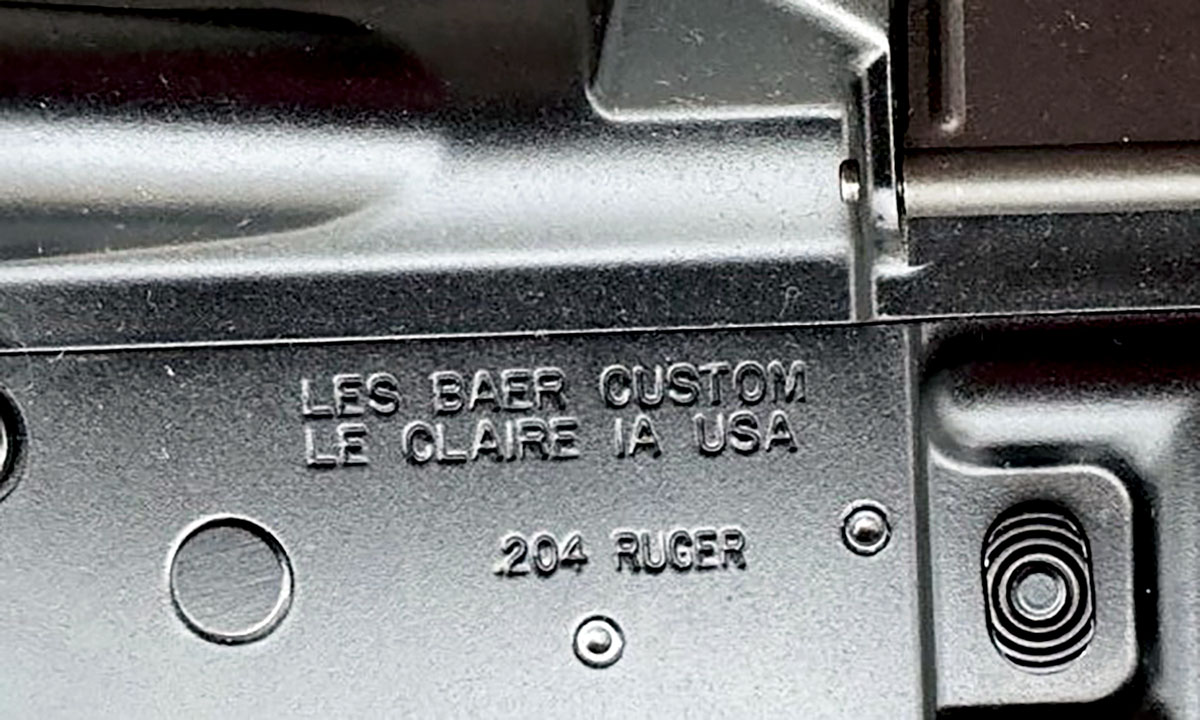
    The Super Varmint variation of the AR-15 rifle was introduced by Les Baer Custom in 1999. With the exception of the butt stock, magazine, screws, springs and the trigger, every part of the rifle was made by LBC. Initially available in 223 Remington, the 204 Ruger option was added in 2005.
    The Super Varmint variation of the AR-15 rifle was introduced by Les Baer Custom in 1999. With the exception of the butt stock, magazine, screws, springs and the trigger, every part of the rifle was made by LBC. Initially available in 223 Remington, the 204 Ruger option was added in 2005.
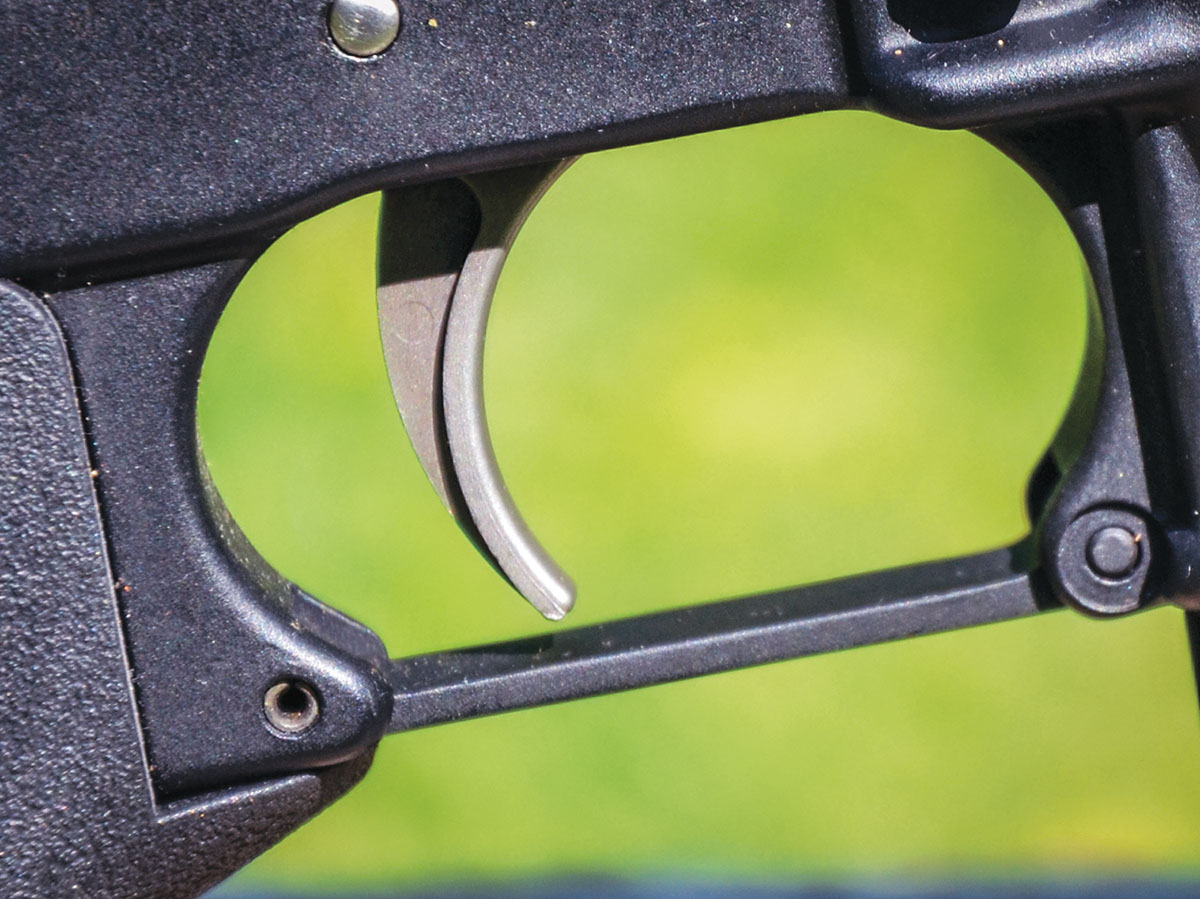
    Handmade by Arnold Jewel, the match-grade HVR trigger breaks crisply at 26.5 ounces with no trace of overtravel. While it can be adjusted down to a 4-ounce break, that’s too light for a varmint rifle.
    Handmade by Arnold Jewel, the match-grade HVR trigger breaks crisply at 26.5 ounces with no trace of overtravel. While it can be adjusted down to a 4-ounce break, that’s too light for a varmint rifle.

    While the 223 Remington and 22-250 have long been the most popular cartridges among varmint shooters, ammunition manufacturers have introduced cartridges that generate less recoil by reducing bullet weight while keeping ballistic coefficient (BC) reasonably high.  Soon after the 17 Remington was introduced in 1971, a friend bought a Model 700 rifle chambered for it. At the time I was shooting a heavy-barrel 40X that left the Remington custom shop in 222 Remington. A need for more speed prompted me to send the rifle to Nashville gunsmith Harry Creighton, who rechambered the barrel and altered the bolt face for the 220 Swift. The very first five-shot I fired with the rifle measured .444 inch, easy to remember because at the time I was hunting deer and feral hogs a lot with a Marlin 336 in 444 Marlin. This was before coyotes arrived in the east, and groundhogs were quite abundant. Out to about 300 yards, my friend and his Model 700 in 17 Remington could do anything I could do, but beyond that, they were no match for the 220 Swift and me. This was due to the fact that the 25-grain bullet of the 17 Remington delivered considerably less energy than the 55-grain bullet of the 220 Swift. Even so, a tack-driving Cooper Model 21 with a gorgeous English walnut stock and a heavy 24-inch stainless steel barrel in 17 Remington has long been and always will be one of my favorite varmint rifles.
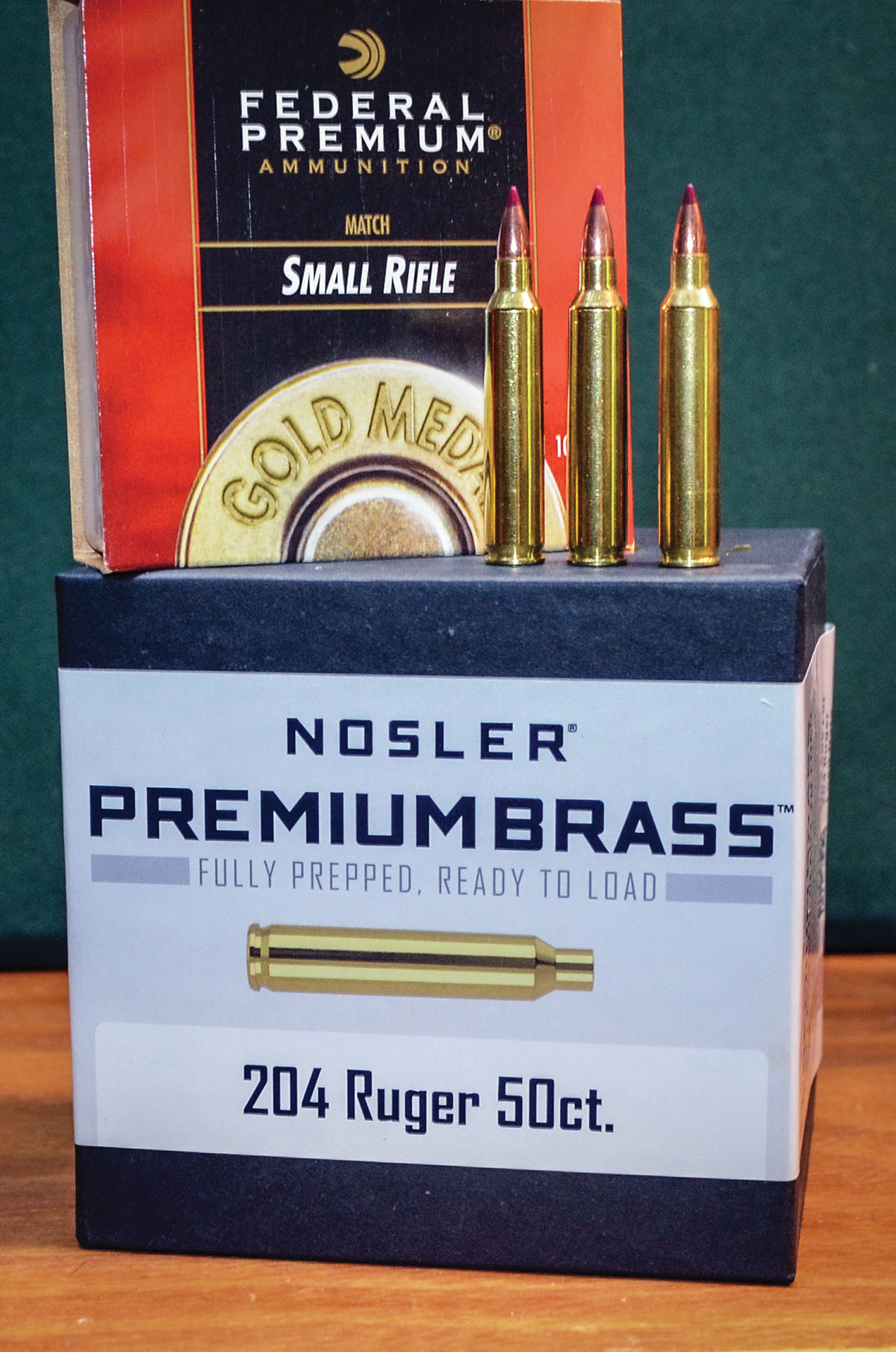
    Fully prepped 204 Ruger cases made by Nosler are of excellent quality, and no primer does a  better job of consistently lighting the fire than  the Federal GM205M primer.
    Fully prepped 204 Ruger cases made by Nosler are of excellent quality, and no primer does a better job of consistently lighting the fire than the Federal GM205M primer.

    Whereas the 17 Remington was basically the 223 Remington necked down for .172-inch bullets, Hornady, with cooperation from Sturm, Ruger & Co., Inc, created the 204 Ruger in 2004 by necking down the 222 Remington Magnum case for .204-inch bullets. When loaded with the 32-grain V-MAX at just over 4,000 feet per second (fps), the new cartridge was not a big improvement over the 17 Remington loaded with a 25-grain V-MAX at 4,000 fps. This is due to the fact that the ballistic coefficient of the 17-caliber
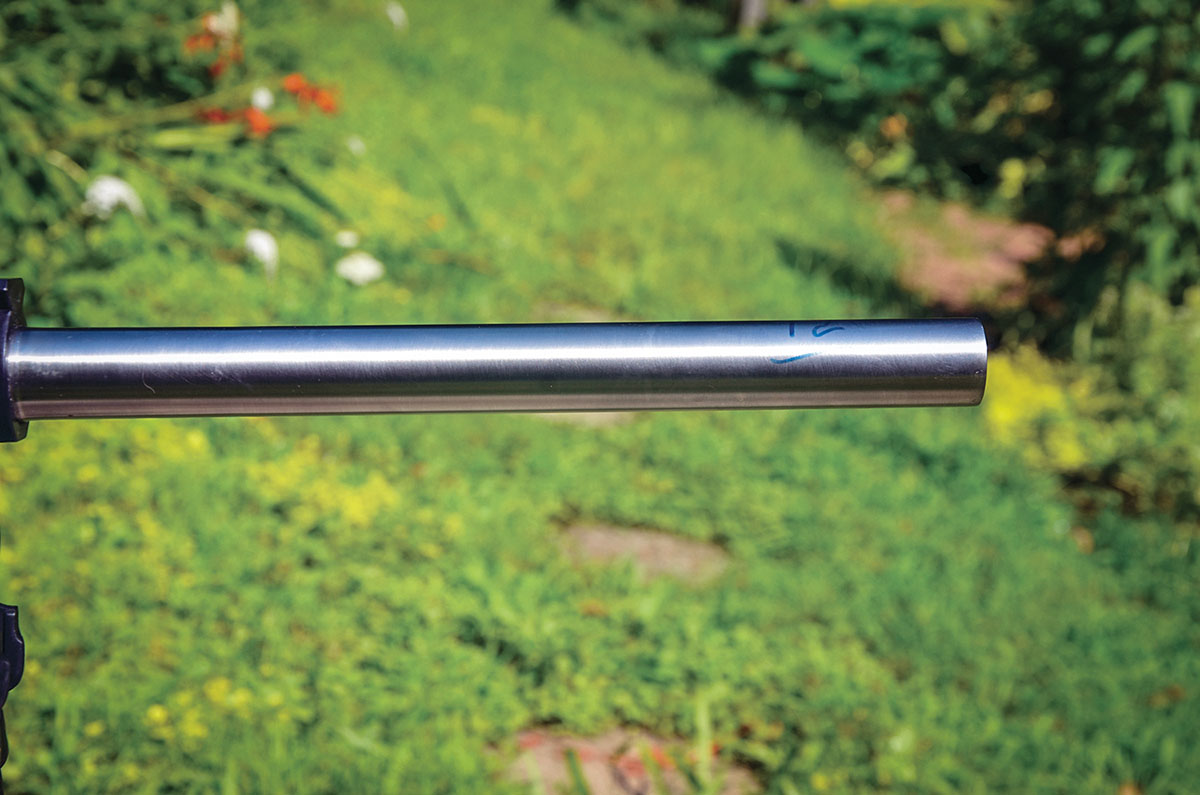
    The heavy benchrest-grade, cut-rifled 416 stainless steel barrel on Layne’s rifle is 24 inches long, and it measures .925 inch at the muzzle where it has a nicely executed target-style crown. The rifling was single-point cut, and the groove diameter does not vary by more than .0001 inch from chamber to muzzle. Rifling twist rate is 1:10 rather than the usual 1:12 for the 204 Ruger. Other barrel length options were 20, 22 and 26 inches.
    The heavy benchrest-grade, cut-rifled 416 stainless steel barrel on Layne’s rifle is 24 inches long, and it measures .925 inch at the muzzle where it has a nicely executed target-style crown. The rifling was single-point cut, and the groove diameter does not vary by more than .0001 inch from chamber to muzzle. Rifling twist rate is 1:10 rather than the usual 1:12 for the 204 Ruger. Other barrel length options were 20, 22 and 26 inches.
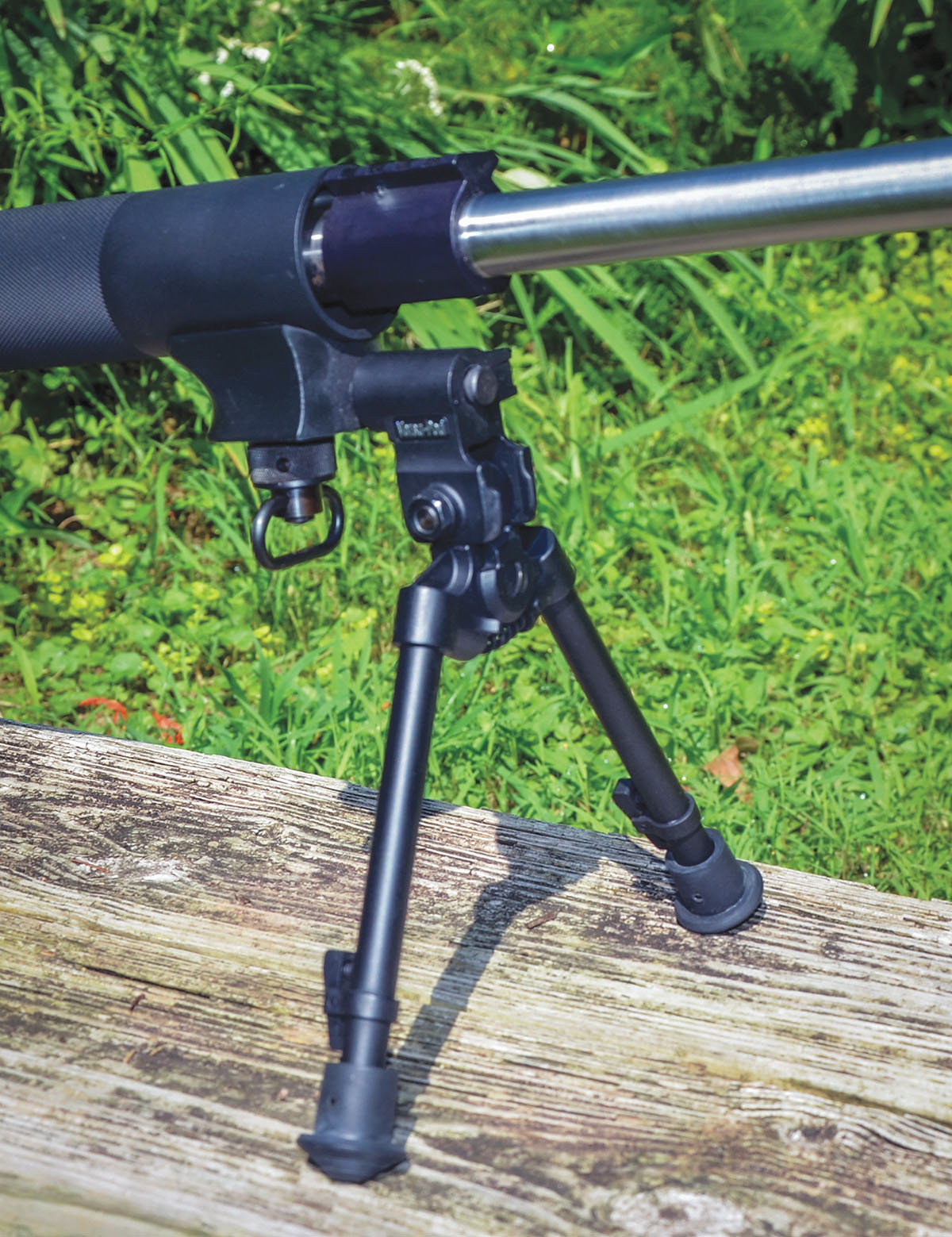
    The Versa-Pod bipod is height-adjustable in  half-inch clicks, and is quite steady.
    The Versa-Pod bipod is height-adjustable in half-inch clicks, and is quite steady.

    bullet is a bit higher (.230 versus .210). With its .275 BC, the 40-grain V-MAX of the 204 Ruger is another matter entirely since that bullet can be driven a bit beyond 3,800 fps. The Nosler 40-grain Ballistic Tip featured in this article duplicates its performance. As might be expected, Ruger was first to offer rifles chambered for the 204, and one of them was the Model 77VT Target with a laminated wood stock and a fairly heavy 26-inch barrel with a 1:12 twist. I had the pleasure of being among the first to bump off prairie dogs with one of those rifles, and it shot inside an inch at 100 yards with Hornady ammo loaded with the 40-grain V-MAX bullet and came close to that with the 32-grain V-MAX.

    The most accurate rifle in 204 Ruger I have shot was built by Les Baer, so perhaps a bit of history on how he got there would be of interest. While involved in the sport of drag racing during the 1960s, Les became widely known for building engines capable of winning all the marbles. During that time, he also discovered that building a 1911 pistol in the basement shop of his Pennsylvania home with the same close tolerances greatly improved accuracy without compromising reliability. Word spread and in 1980 Baer officially launched his professional pistolsmithing career as Baer Custom Guns. Then in
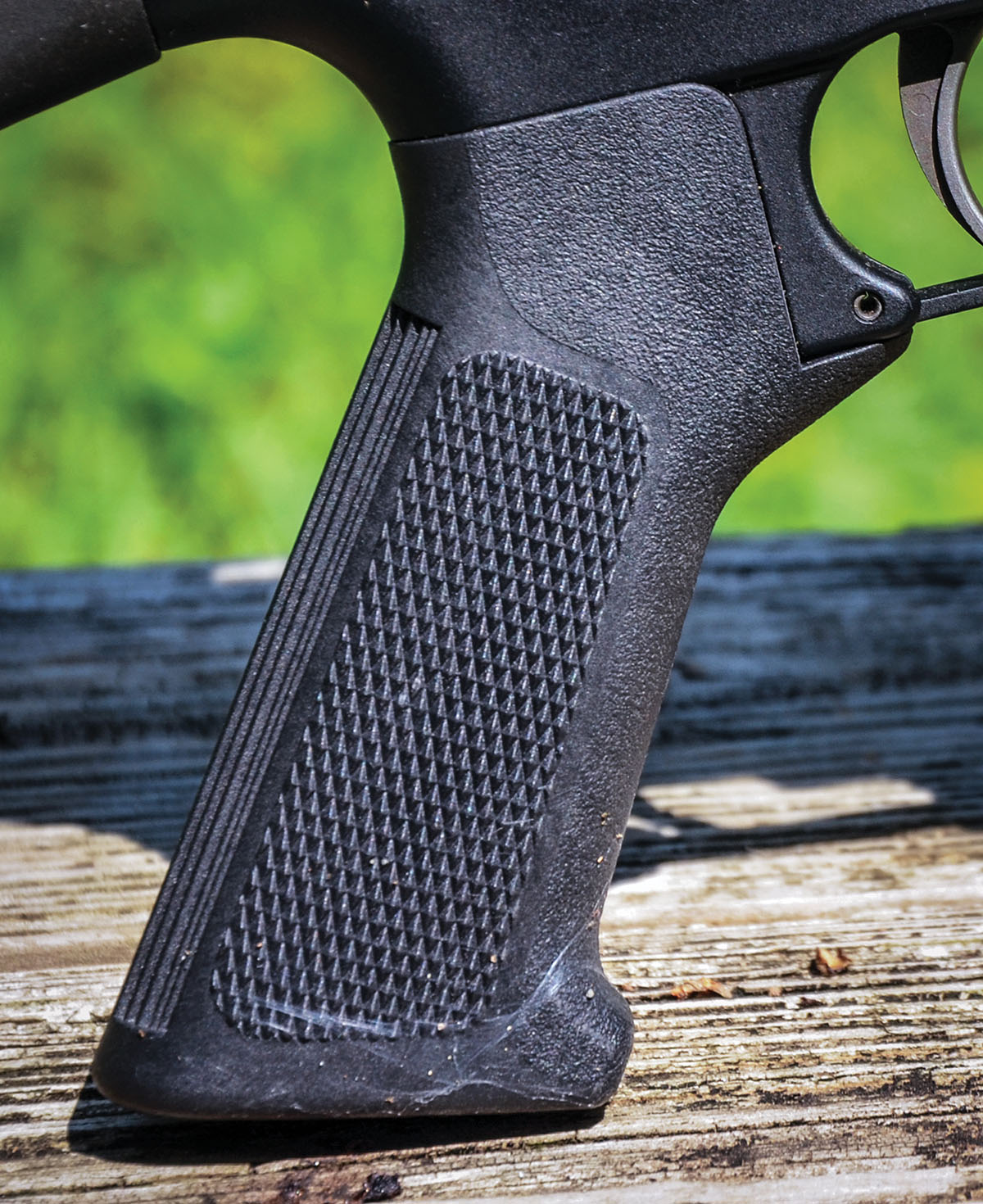
    A radius on the grip, just behind the trigger,  increases shooter comfort a bit on busy days when hundreds of rounds are fired in a  target-rich environment.
    A radius on the grip, just behind the trigger, increases shooter comfort a bit on busy days when hundreds of rounds are fired in a target-rich environment.

    1982, Springfield Armory hired him to manage the custom shop at the company’s Geneseo, Illinois, facility. Even so, Baer’s dream of launching his own line of top-tier 1911 pistols grew stronger each day, and in 1991 he left Springfield Armory and established Les Baer Custom (LBC). Due to the adoption by Illinois politicians of unacceptably restrictive gun laws, in 2007 Baer relocated to LeClaire, Iowa, where he remains today. Many variations of the 1911 pistol in 9mm Luger, 38 Super, 10mm Auto and 45 ACP are available. All have an accuracy guarantee of 3 inches at 50 yards, but there are a few happy exceptions. The Camp Perry-ready Wadcutter Pistol in 45 ACP is capable of consistently shooting five bullets inside 1.5 inches at 50 yards. 
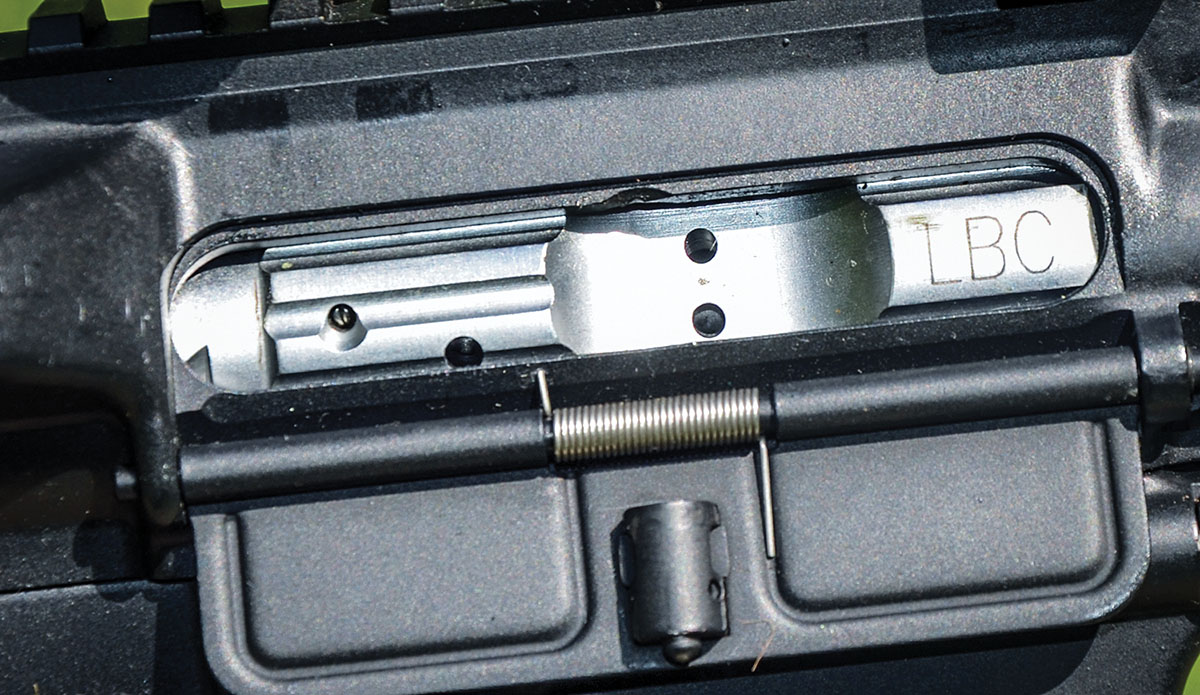
    The Ultimate Match carrier with chromed bolt and extractor was patented by Les Baer Custom and is easily recognized by ribs machined into the side of the carrier.
    The Ultimate Match carrier with chromed bolt and extractor was patented by Les Baer Custom and is easily recognized by ribs machined into the side of the carrier.

    There was a time when Les Bauer Custom offered extremely accurate rifles as well, with the Super Match and Super Varmint variations of the AR-15 rifle introduced in 1999, perhaps being the most interesting. Initially available in 223 Remington, the 204 Ruger option was added in 2005. Even more interesting is the fact that those rifles were guaranteed to shoot five bullets inside half an inch at 100 yards with their preferred loads. The upper and lower receivers were precision CNC-machined from 7075 aluminum forgings. 

    Also made in-house, the heavy benchrest-grade, cut-rifled 416 stainless-steel barrels were hand lapped and cryogenically treated. The rifling was single-point cut, which means that a hardened steel cutter is adjusted to cut a single groove approximately .0005 inch deep through the bore of the barrel and is then pulled through to create the other grooves in the barrel. After each groove is cut, the cutter is adjusted to cut .0005 inch deeper, and this is repeated until all grooves have reached the desired depth. During final inspection, a barrel with a groove diameter that varied more than .0001 inch from chamber to muzzle was not used on a Super Varmint rifle. Barrel length options were 20, 22, 24 and 26 inches. With the exception of the buttstock, magazine, screws, springs and the trigger, every part of the Super Varmint was made by LBC.
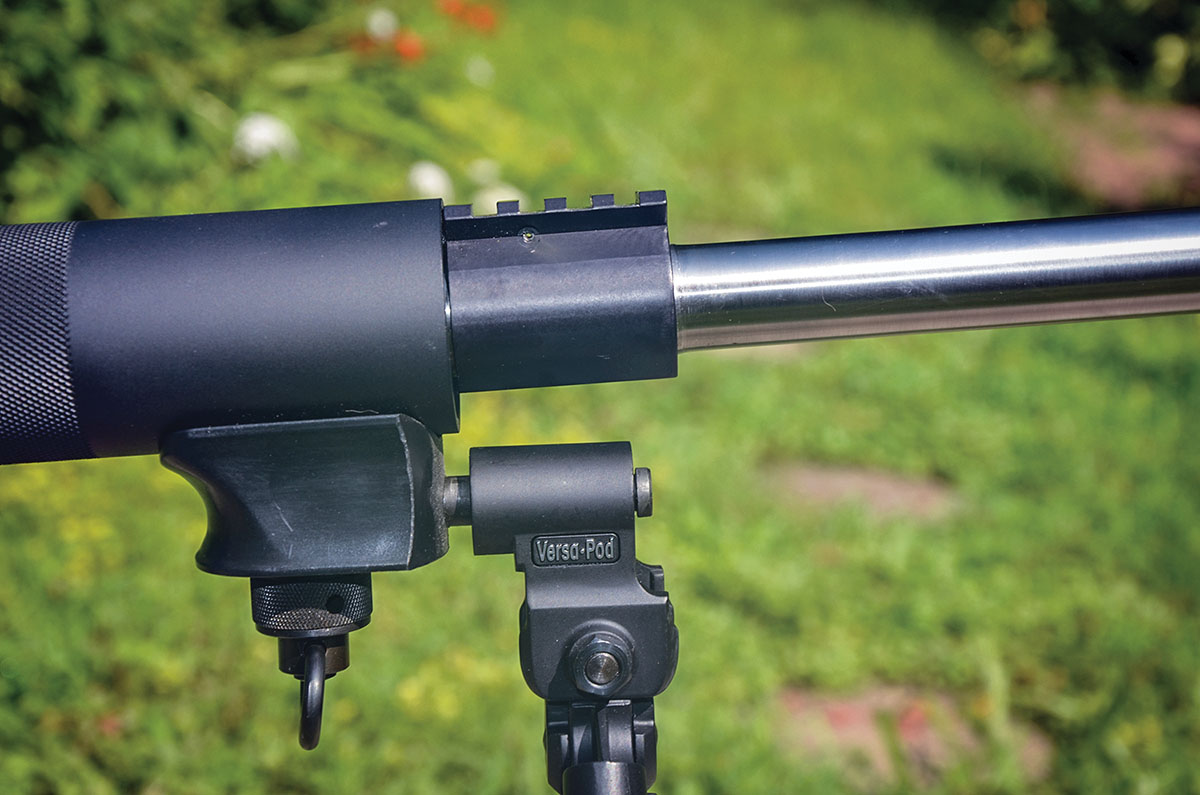
    The gas block, along with the free-floating handguard and its lock ring, was made by Les Baer Custom. Easily attached and just as easy to detach, the Versa-Pod folding bipod was included with the Super Varmint rifle.
    The gas block, along with the free-floating handguard and its lock ring, was made by Les Baer Custom. Easily attached and just as easy to detach, the Versa-Pod folding bipod was included with the Super Varmint rifle.
    Except for the barrel, all metal parts, including the free-floating handguard and its lock ring, were given a Teflon-S Bear Coat finish. In addition to a very nice soft carrying case, the Super Varmint came with a Visa-Pod folding bipod attached. Easily detached and reattached, it is height adjustable.

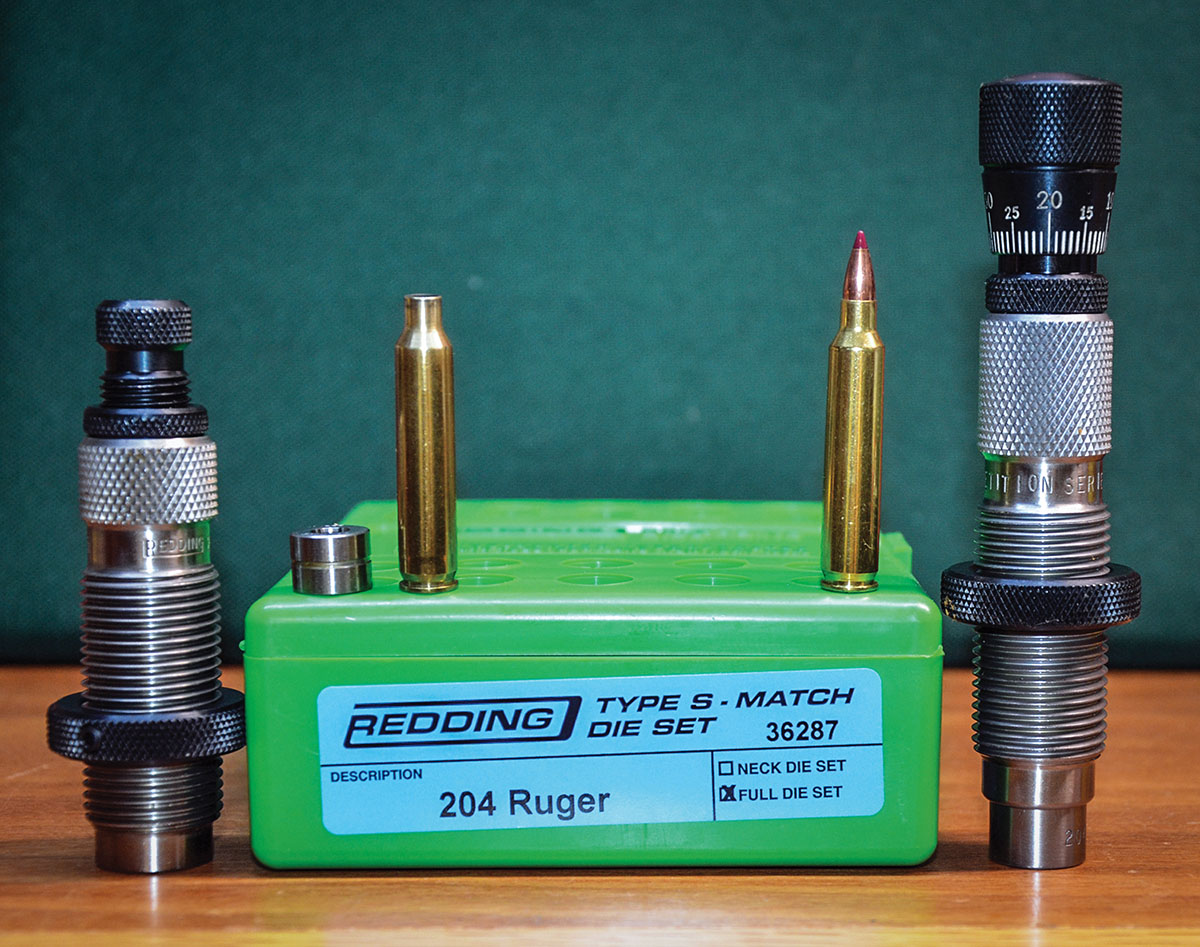
    Using Nosler fully-prepped brass, the neck diameter of a loaded cartridge was .227 inch and a Redding Type S Bushing-Style die with a .225-inch bushing (at left) was used to full-length resize cases.
    Using Nosler fully-prepped brass, the neck diameter of a loaded cartridge was .227 inch and a Redding Type S Bushing-Style die with a .225-inch bushing (at left) was used to full-length resize cases.
    My Super Varmint in 204 Ruger has a 24-inch barrel measuring .925 inch at the muzzle, where it has a very nicely executed target-style crown. The rifling twist rate is 1:10 rather than the usual 1:12 for the 204 Ruger. The rifle weighs 9.75 pounds, and the attachment of a faithful old Nikon Monarch 6-24x 50mm scope in Talley rings and the Visa-Pod bipod increases heft to 11.75 pounds. Picatinny slots machined into the top of the receiver make mounting a scope easy. While a bit heavy for toting up steep mountains, the rifle is just the ticket for shooting over a bipod or nestled in a Lyman Match Bag resting atop a portable benchrest. Either way, accuracy is the same. Groups included with the rifle measured .26 inch and .29 inch, but information on the test load used was not included. A radius on the grip, just behind the trigger, increases shooter comfort a bit on busy days when hundreds of rounds are fired in a target-rich environment. 

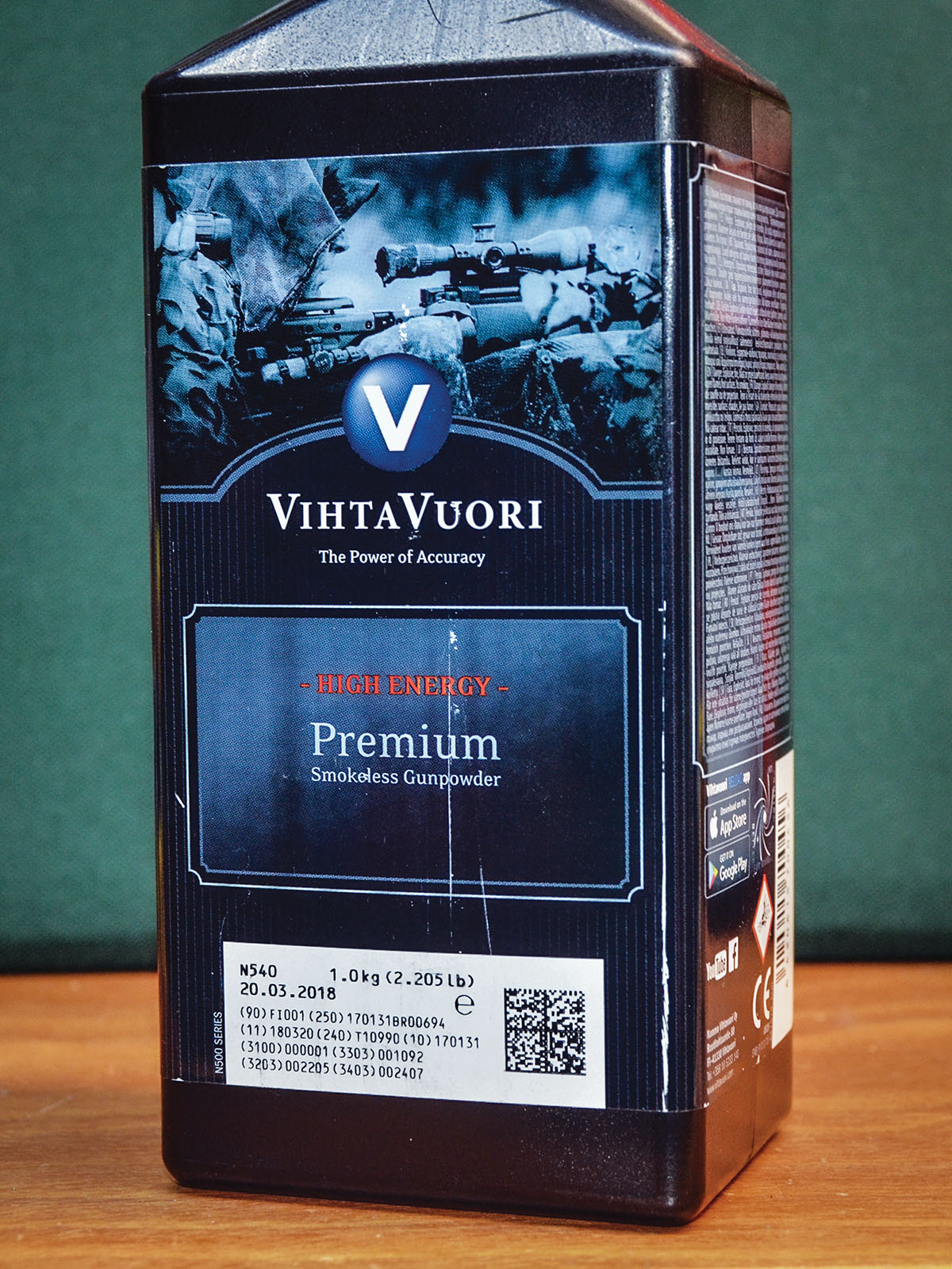
    Of the powders Layne has tried in various rifles in 204 Ruger through the years, Vihtavuori N540 consistently ranked among the very best for developing loads that deliver excellent accuracy when various bullets are driven to  maximum velocities. As a bonus, an additive in the powder does a great  job of reducing bullet jacket fouling in the barrel.
    Of the powders Layne has tried in various rifles in 204 Ruger through the years, Vihtavuori N540 consistently ranked among the very best for developing loads that deliver excellent accuracy when various bullets are driven to maximum velocities. As a bonus, an additive in the powder does a great job of reducing bullet jacket fouling in the barrel.
    Made by Arnold Jewel, who sadly passed away in 2022, the match-grade HVR trigger breaks crisply at 26.5 ounces with no trace of overtravel. While it can be adjusted down to a 4-ounce break, that’s a bit too light for a varmint rifle. It is absolutely the best trigger I have pulled on an AR-15 during decades of shooting dozens from various sources. It is not unusual for the fit between the upper and lower receivers of an AR-15 rifle to be a bit loose, but due to precision machining, the Super Varmint has zero looseness – and I do mean zero. Grasping the grip with one hand and the upper receiver with the other hand and twisting with all my might revealed no movement whatsoever.  While the upper on my rifle has the usual forward-assist, sans forward-assist was also an option. Unable to find a gas block, carrier, bolt or extractor from another company that met his high-quality standards, Les Baer chose to make them in-house. His Ultimate Match carrier with chromed bolt and extractor was patented and is easily recognized by ribs machined into the side of the carrier. According to Baer, increasing carrier weight a bit increased reliability. The QMI Gold titanium firing pin was chosen because it speeds ignition and reduces the likelihood of an out-of-battery slam fire. 

    When preparing handloads for the Ultra Varmint, I began the program with Nosler fully prepped cases and Federal GM205M primers. A Sinclair International hand-
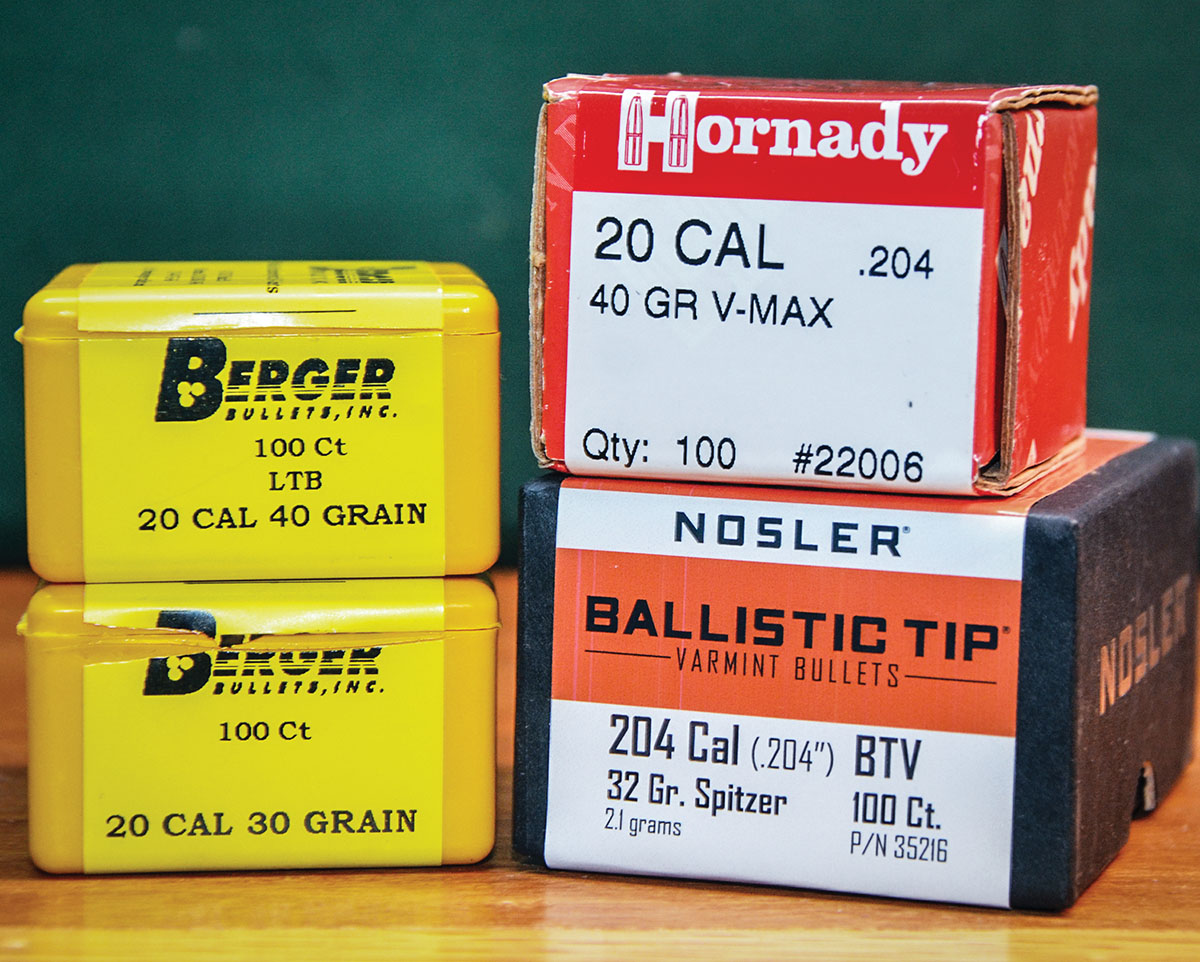
    These bullets verified the accuracy guarantee of the Super Varmint rifle by consistently shooting inside a 1⁄2-inch at 100 yards.
    These bullets verified the accuracy guarantee of the Super Varmint rifle by consistently shooting inside a 1⁄2-inch at 100 yards.
    priming tool was used to seat primers. Of the various powders I have tried in the 204 Ruger through the years, Vihtavuori N540 consistently ranked among the best for developing loads that deliver excellent accuracy when various bullets are driven to maximum velocities. As a bonus, an additive in the powder does a great job of reducing bullet-jacket fouling in the barrel, and that’s important when loading for a varmint rifle. Using the Nosler brass, the neck diameter of a loaded cartridge is .227 inch, and a Redding Type S Bushing-Style die with a .225-inch bushing was used to full-length resize cases. A precise fit between the floating seating stem and guide of the Redding Competition seating die assures minimal bullet runout in loaded rounds.    

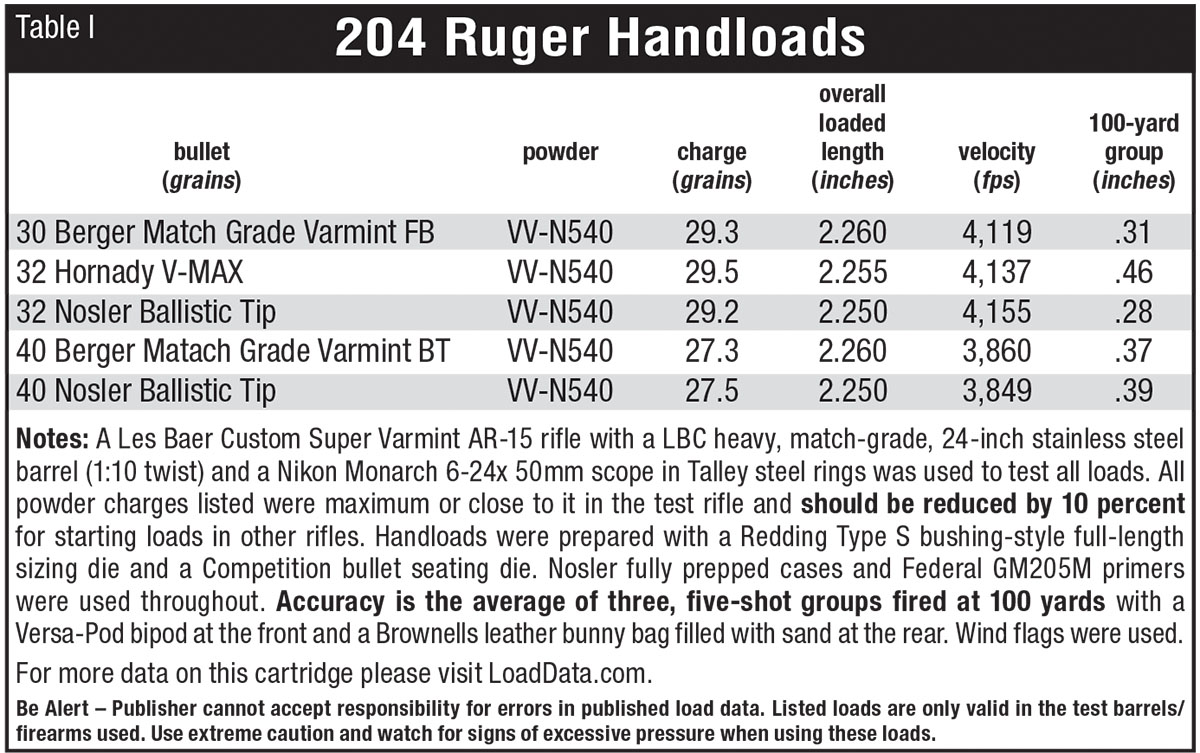
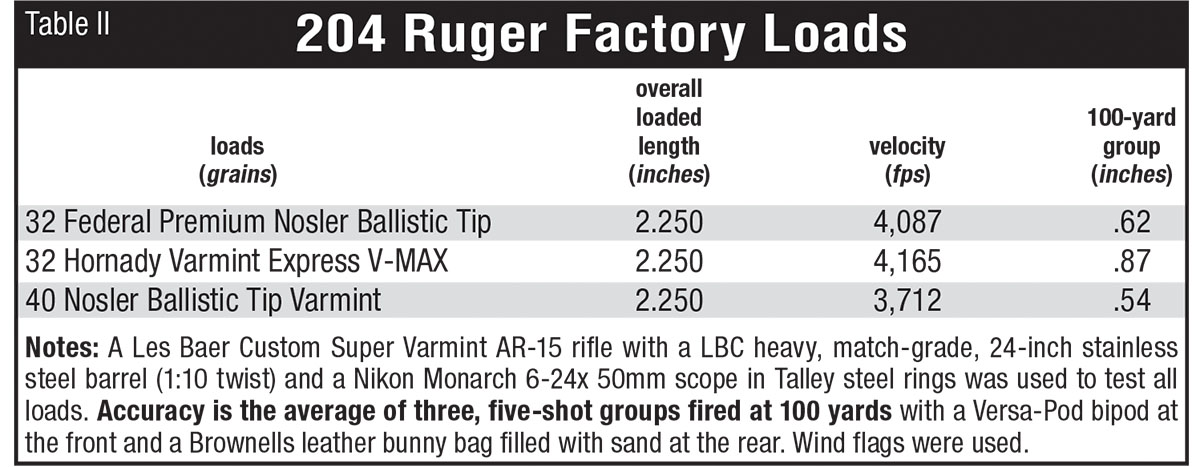
    When accuracy-testing the rifle from a benchrest, I used the Versa-Pod that came with it along with a bunny-ear sandbag at the rear. A couple of Graham wind flags with one placed 10 yards beyond the muzzle and the other adjacent to the 100-yard target were positioned so they could be seen in the scope. After observing the flags for a while, I picked a wind condition that came around most often and machine-gunned five shots each time it arrived. The weight of the rifle along with its light trigger pull helped. The handloads that consistently shot inside half an inch are included in this article. Three of several factory loads I have tried in the rifle shot inside one inch at 100 yards. 

    I am not sure when Les Bauer stopped building super-accurate AR-15 rifles, but it was probably about six years ago. A web search will turn up slightly used rifles in 223 Remington in the $1,500 to $2,000 price range, but the 204 Ruger seems to be rather scarce.

    Wolfe Publishing Group