A Wyoming Prairie Dog Hunt with the 6.5 Creedmoor
Loading the 6.5 Creedmoor Light and Fast
feature By: Barb Melloni | November, 26
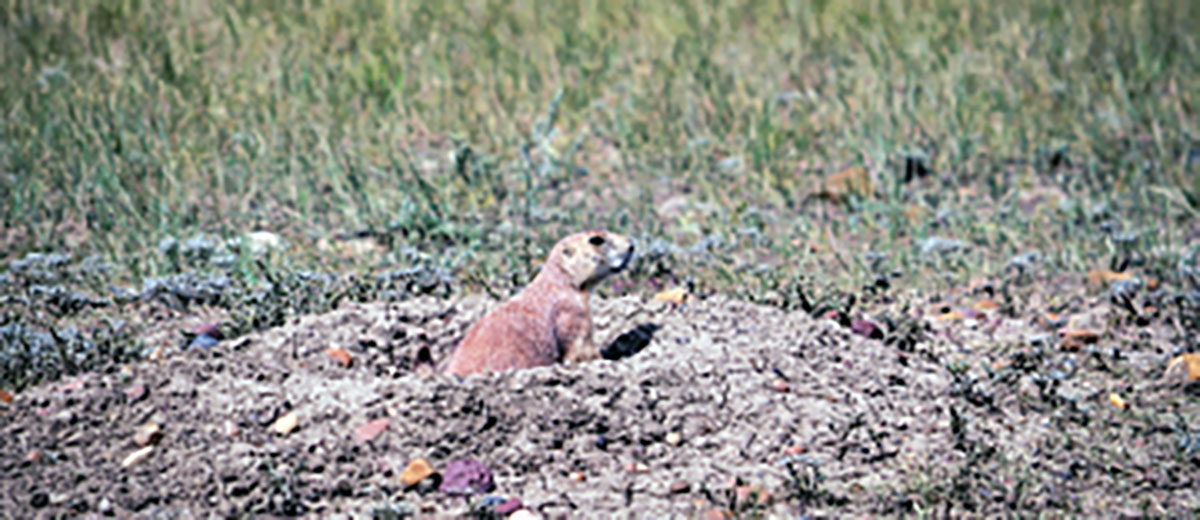
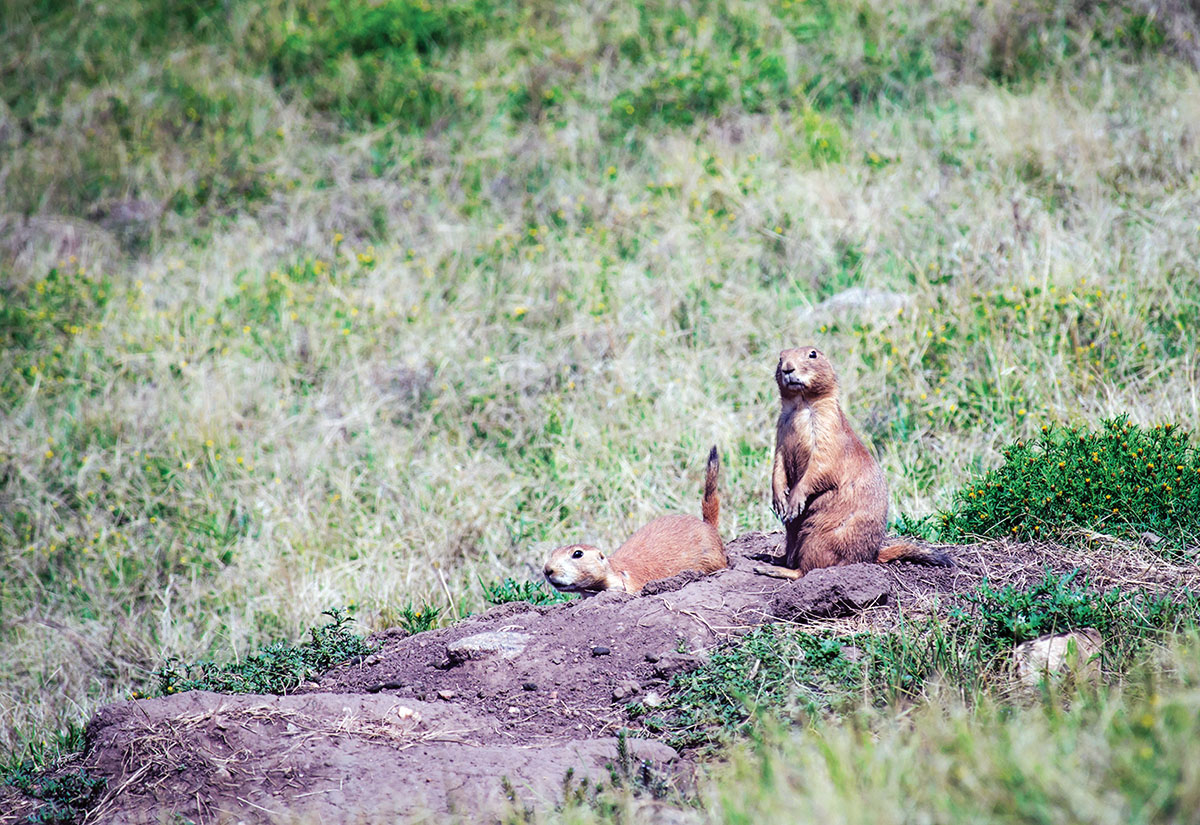
If you were to ask a group of varmint hunters what their go-to rifle and cartridge combination was, quite a few options would inevitably enter the conversation. With a trip to Wyoming for a long-awaited prairie-dog hunt on the horizon, I began to weigh my options as far as which guns to bring along. Our guide for the hunt had already advised that the dog towns were bursting at the seams after the plague wiped them out the year prior.
Prairie dog towns can create a real challenge for cattle ranchers in Wyoming and other states they call home because both prairie dogs and livestock depend on the same limited food source. As colonies grow, prairie dogs consume and ultimately destroy the very landscape that cattle would otherwise use, a pattern that becomes especially noticeable during a drought. With vegetation already scarce, prairie dogs can greatly reduce the usable grazing available to a herd and force ranchers to adjust stocking rates, rotate cattle to other pastures, or even supplement feed. For ranchers whose livelihood depends on getting the most out of every acre, a large and growing population of prairie dogs can quickly become more than a nuisance; it can become a land-management concern and financial hardship as well.
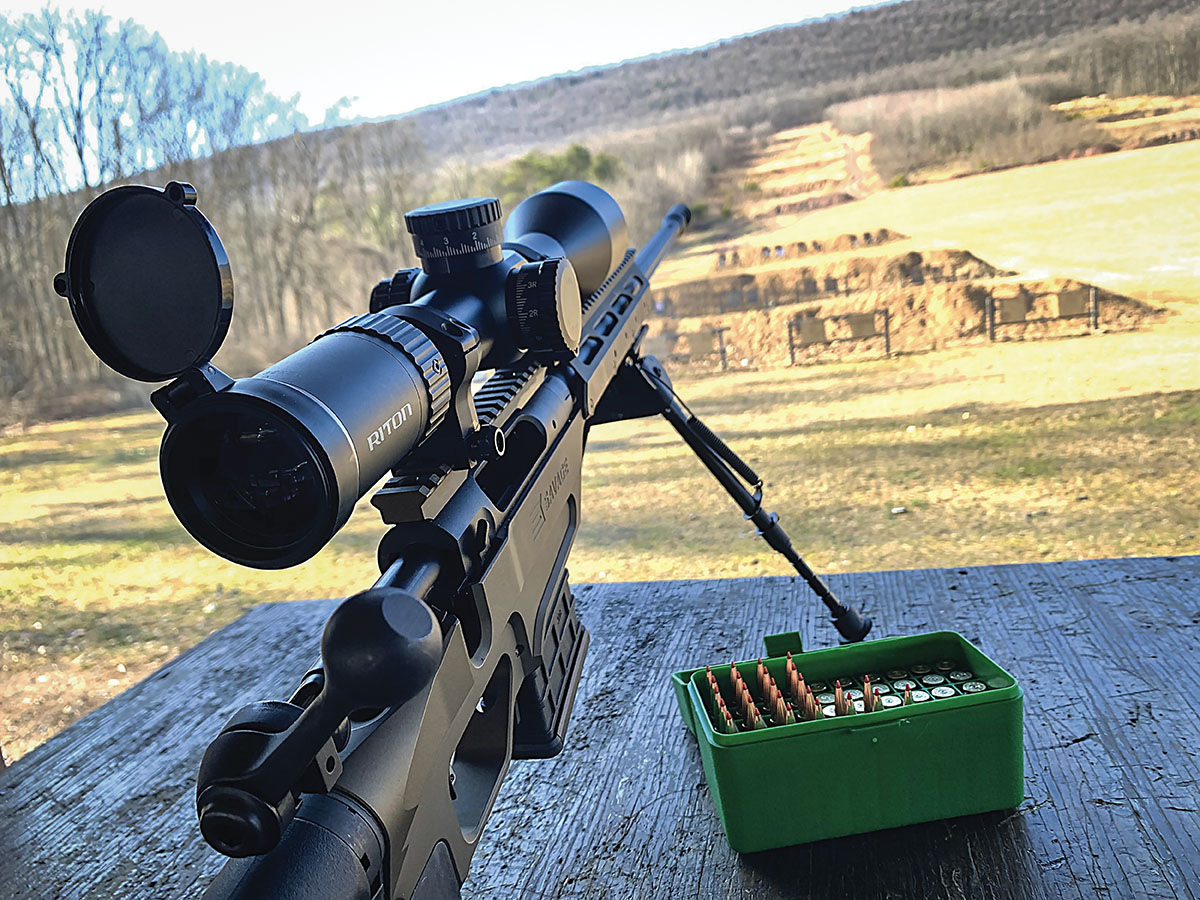
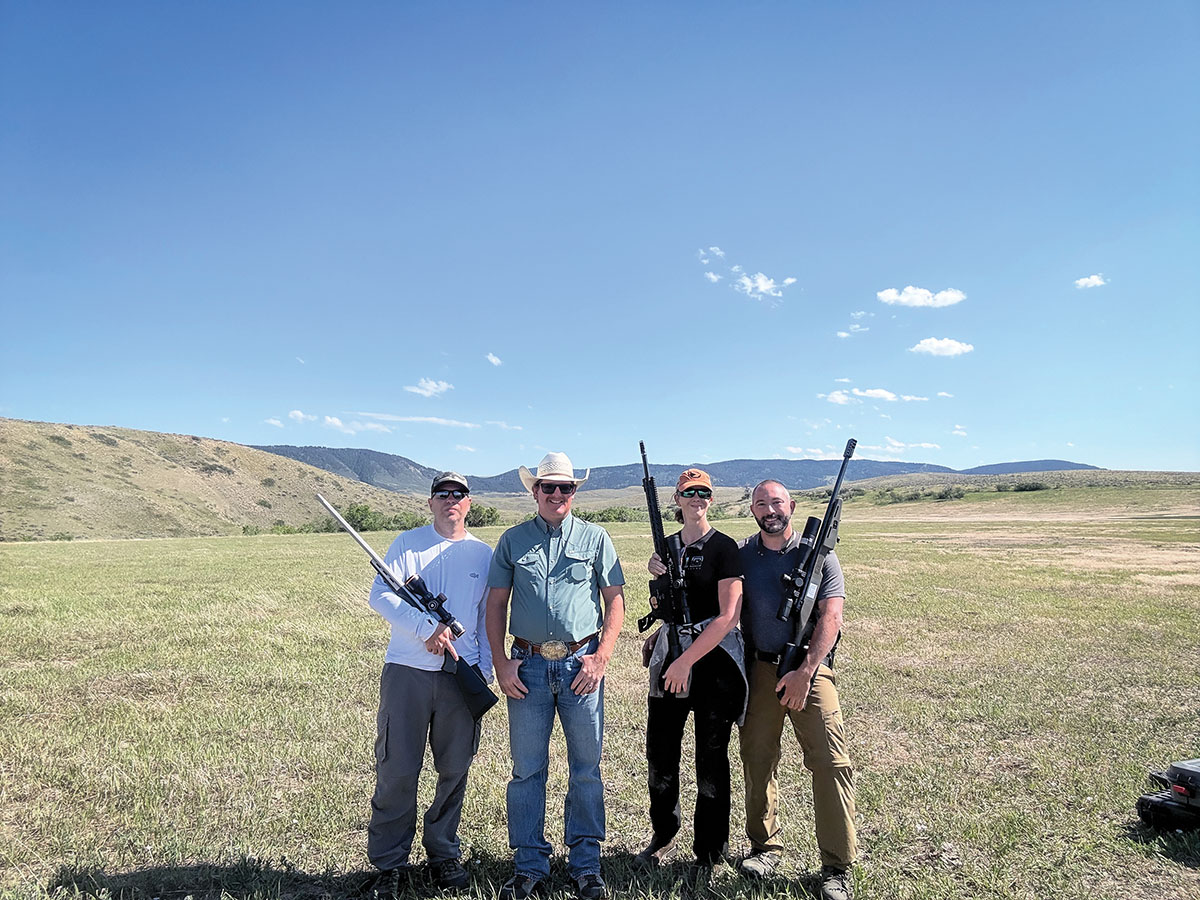
Hunting prairie dogs has a way of turning into a marathon rather than a sprint, and even with several rifles available to rotate throughout the day, barrels can heat up quickly. With this in mind, I opted to bring along three rifles that would allow me to cover everything from up-close-and-personal engagements to those much, much farther out. Having already set aside two rifles chambered in 17 HMR and 22 ARC, I opted for my trusty bolt gun, a Savage 110 Stealth Evolution chambered in 6.5 Creedmoor. Having spent most of its time as a dedicated long-range rifle, I had become comfortable with both the rifle and its capabilities over the years. It shot well, I knew how it handled, and I had already developed plenty of confidence in it at distance. That familiarity led to a simple question: Instead of starting from scratch with another rifle, why not work up a prairie-dog load for the Savage and see how a deliberately crafted 6.5 Creedmoor load would fare on the prairies of southern Wyoming?
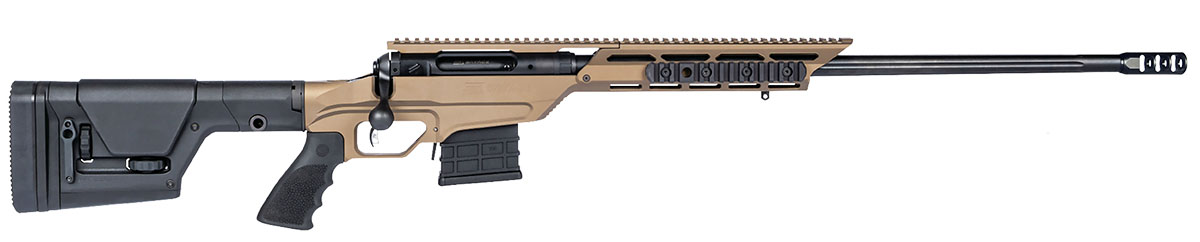
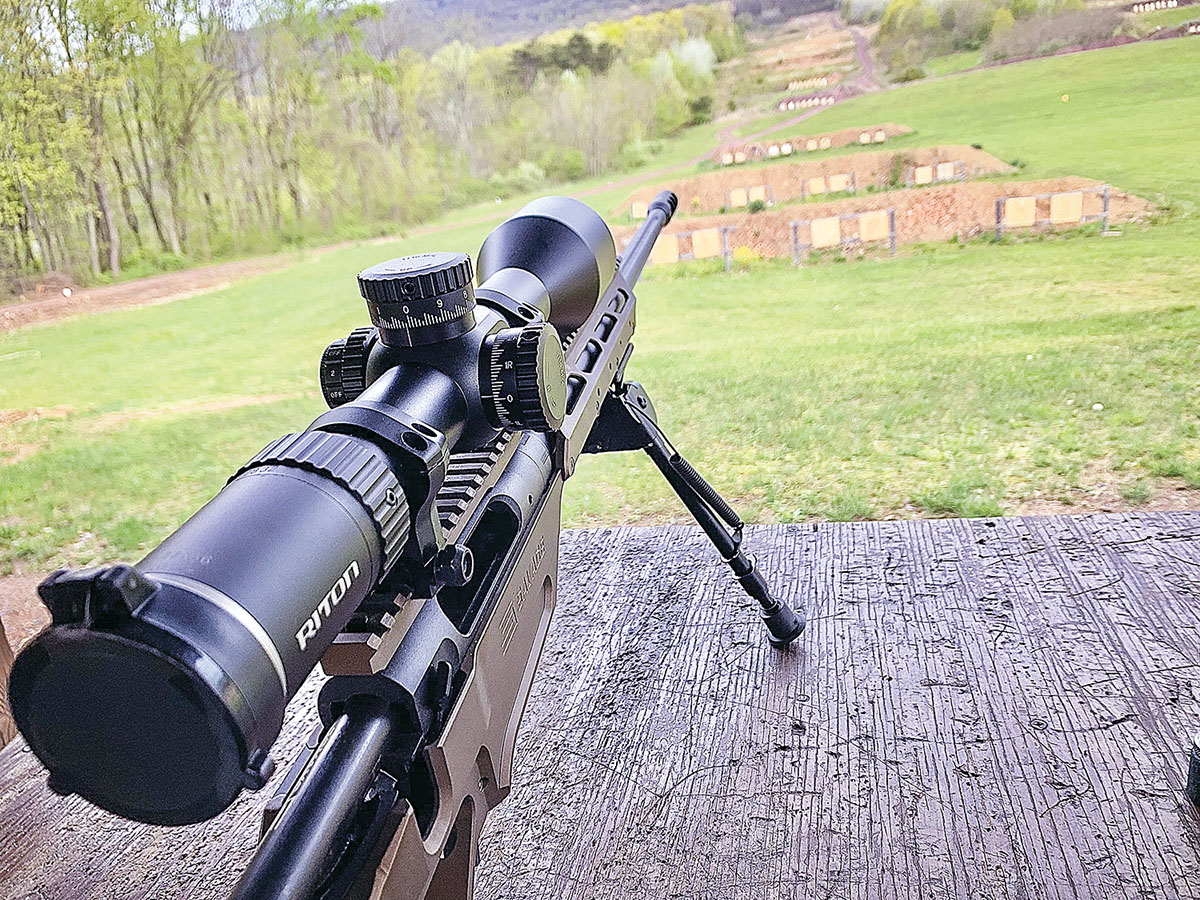
My Savage 110 Stealth Evolution, chambered in 6.5 Creedmoor, was already well-suited to the kind of longer-range shooting I had in mind. The Savage 110 featured a heavy, fluted, free-floating 24-inch barrel, an adjustable Magpul PRS Gen 3 buttstock, and an adjustable AccuTrigger. A rifle that weighs eleven pounds before adding a riflescope and a bipod isn’t something I’d want to carry for miles, but this wasn’t that kind of hunt, as we’d be shooting from benches atop a flatbed trailer. This rifle had another advantage that couldn’t be measured: familiarity. I had already spent plenty of time
behind it, knew how the trigger broke and understood how it behaved under a variety of conditions. When the targets are small, and the distances stretch well beyond a few hundred
yards, confidence and familiarity with your rifle removes one more variable from the equation should things go awry and you’re left to pinpoint why.
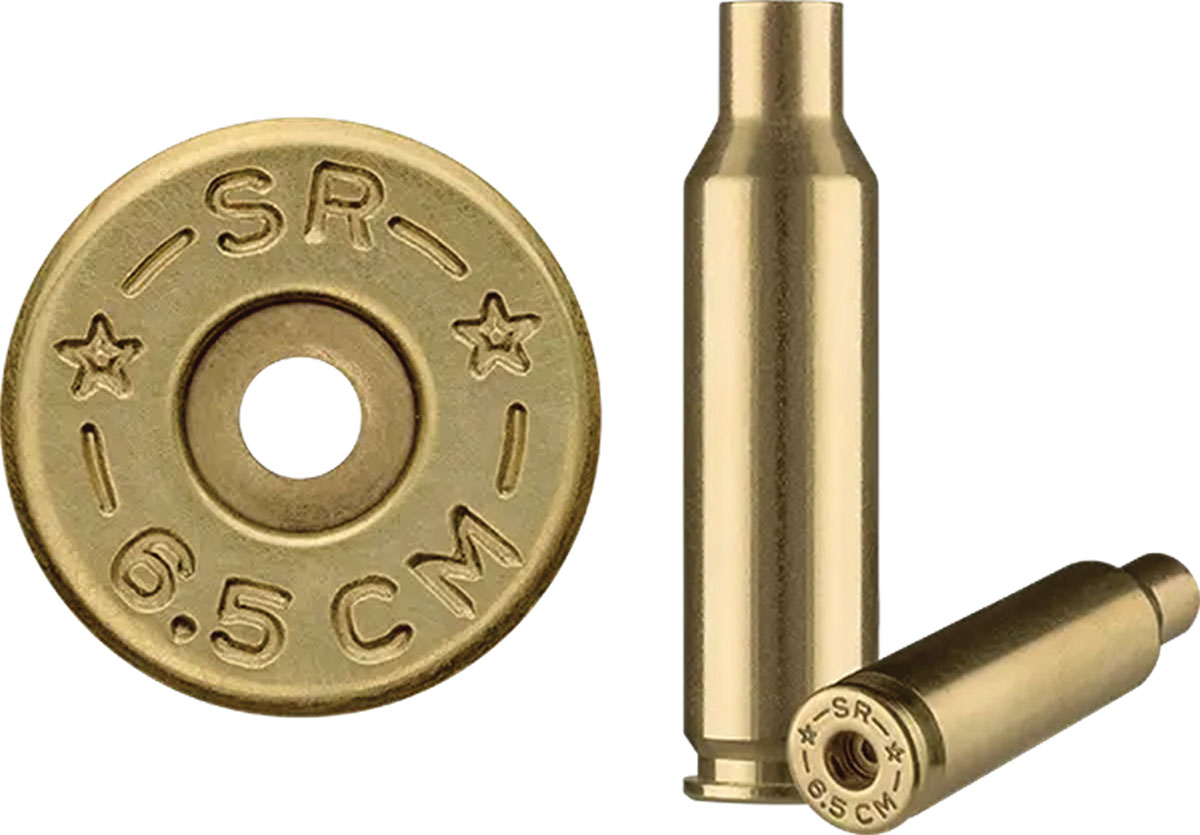
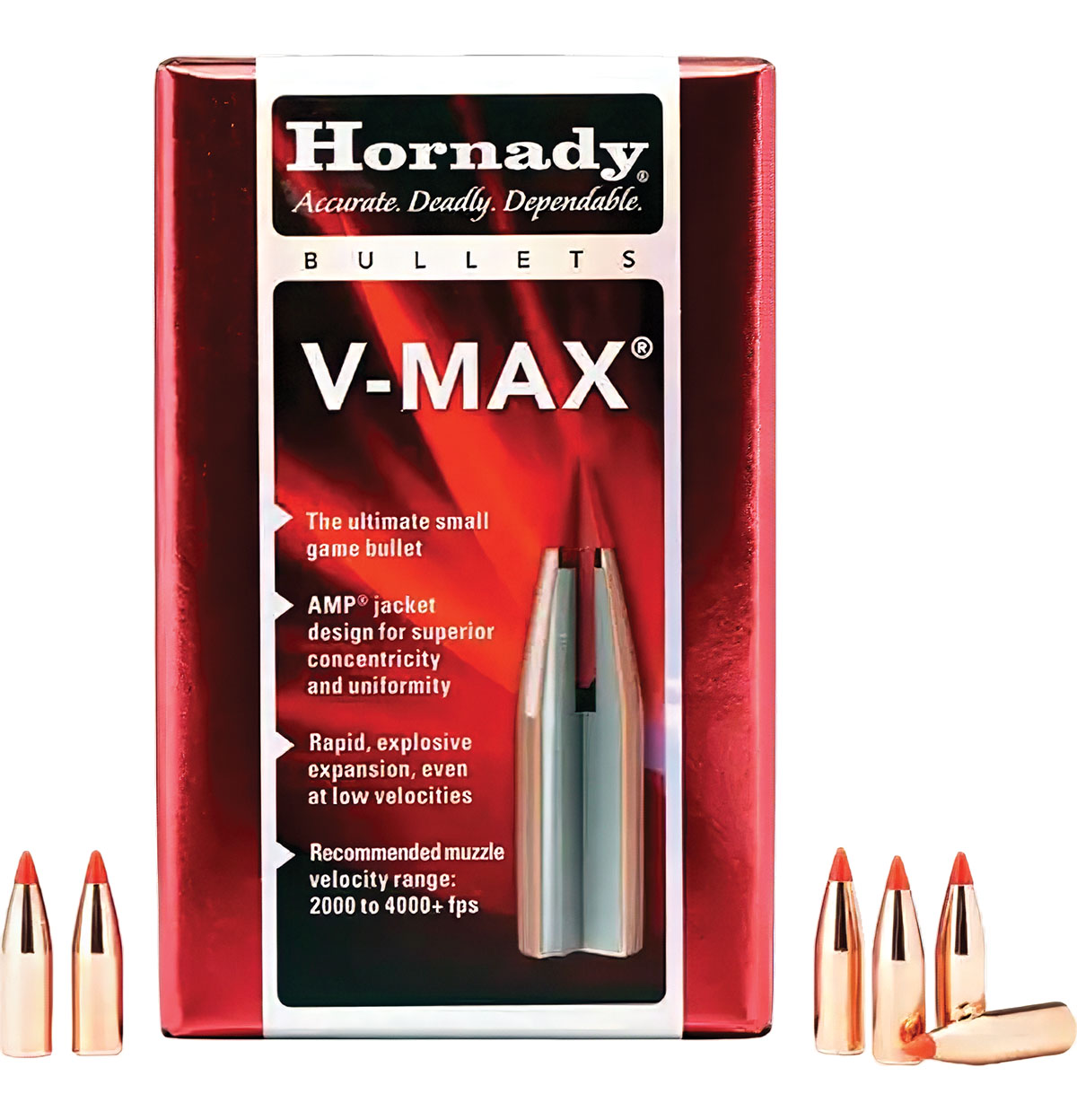
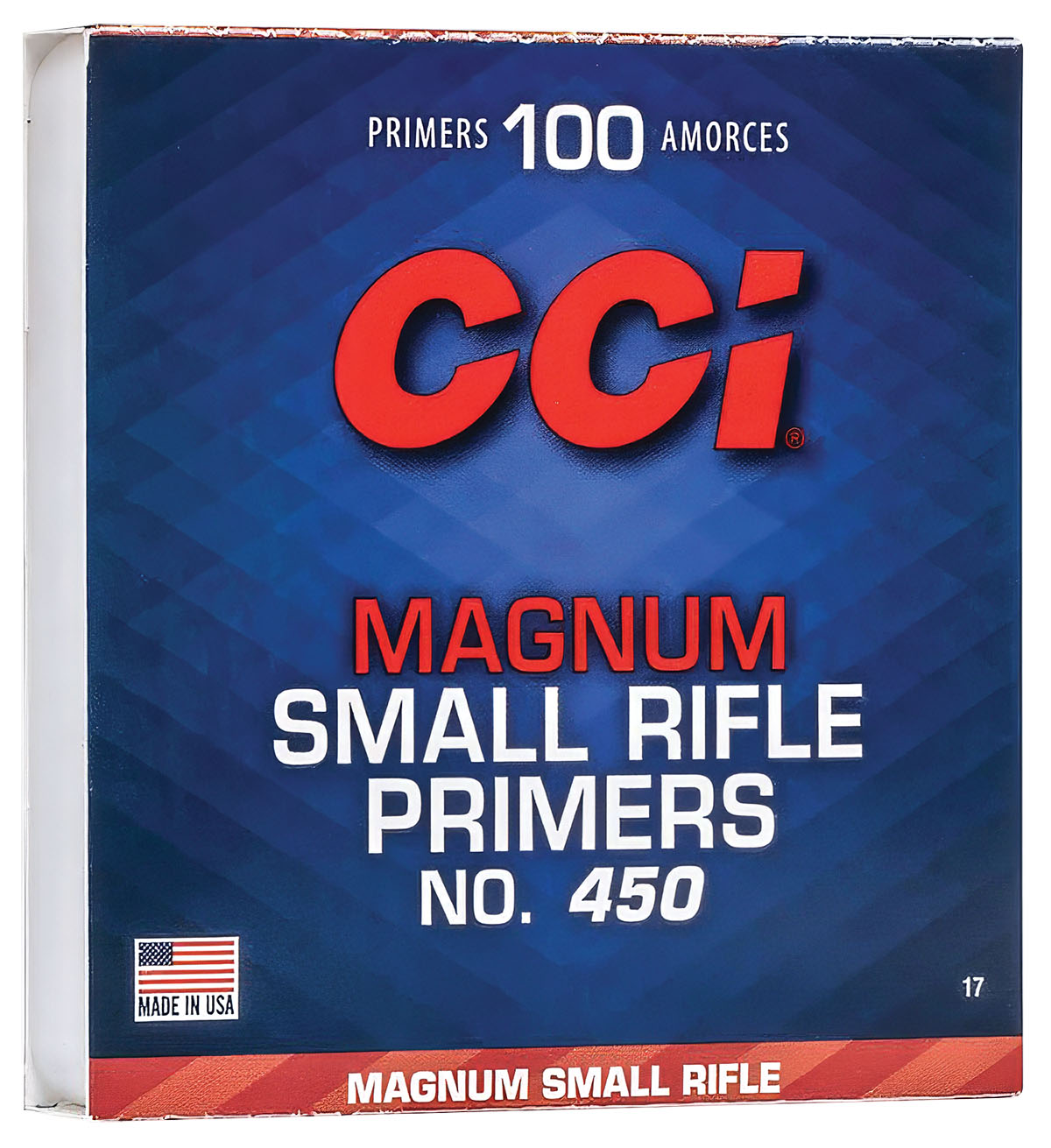
Before load development could begin, I had to decide what I wanted from the final product. It wasn’t going to be a big-game load, so there wasn’t any need to mimic heavier-bullet combinations that I had previously used for long-range target shooting. For this hunt, I was in search of a bullet that was accurate, specifically designed for varmints, with the capability of rapidly expanding and fragmenting to dispatch unlucky prairie dogs in its path. Hornady’s 95-grain V-MAX was a perfect fit, offering the varmint-specific performance I wanted for the load we’d ultimately take out West. At 95 grains, it was considerably lighter than their 140-grain ELD-M bullets I use when shooting out to 1,000 yards and beyond. For brass, I used the same Starline small rifle primer 6.5 Creedmoor cases that I use in my long-range load, paired with the same CCI Magnum Small Rifle primers.
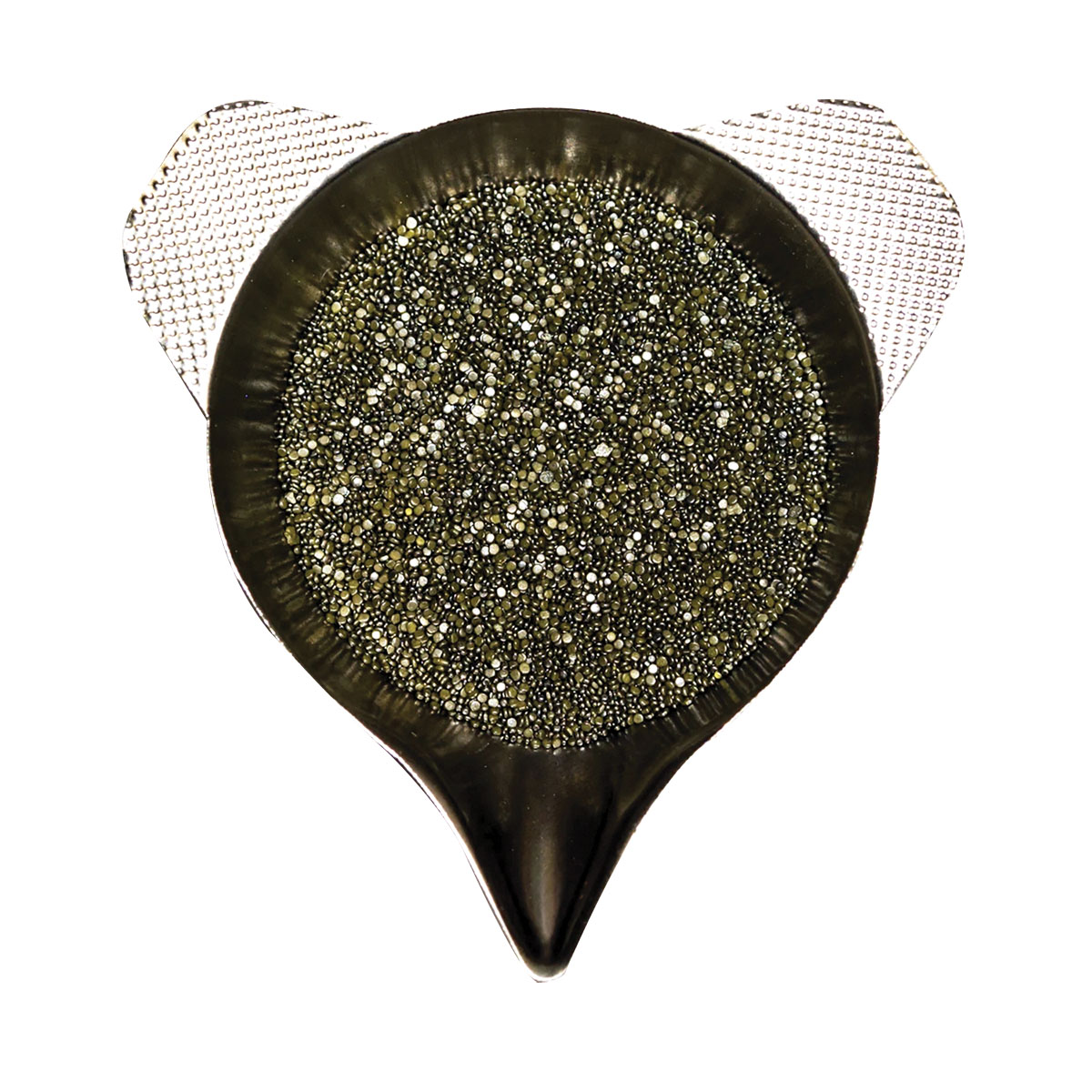
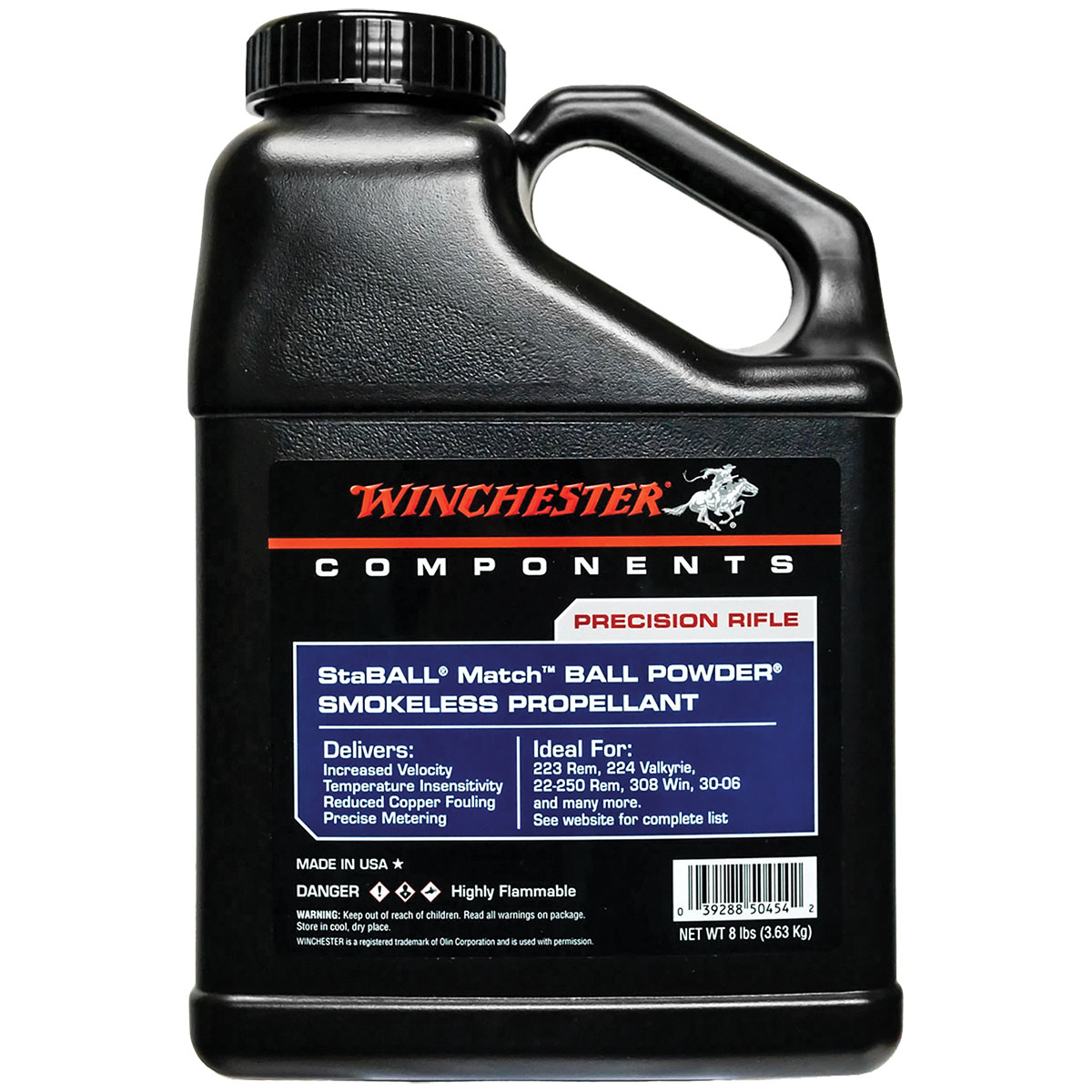
Last but not least, it was time to select a powder. My long-range target round for this gun uses Winchester StaBall 6.5, a temperature-stable ball powder that I’ve metered with ease through a Hornady Lock-N-Load Powder Measure and an RCBS Matchmaster Powder Dispenser. For these prairie-dog rounds, I stayed along those same lines and selected Winchester StaBALL Match, another ball powder ideal for our 95-grain projectiles.
With the components selected, it was time to begin the load development process and see whether everything, once
combined, would translate into the accuracy I hoped to see on paper. After plugging our components into Hodgdon’s Reloading Data Center, it was determined that the starting charge was
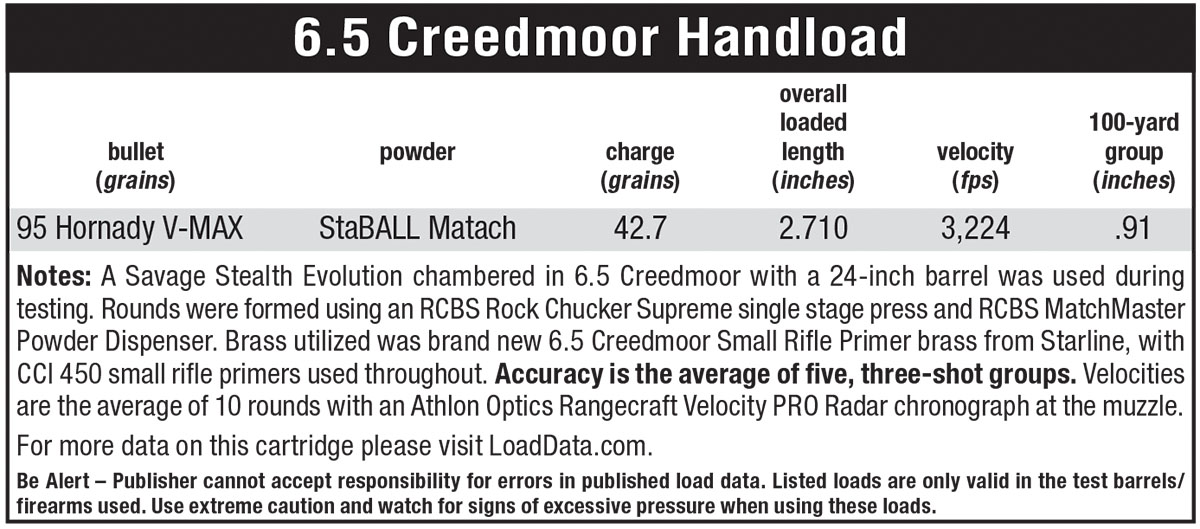
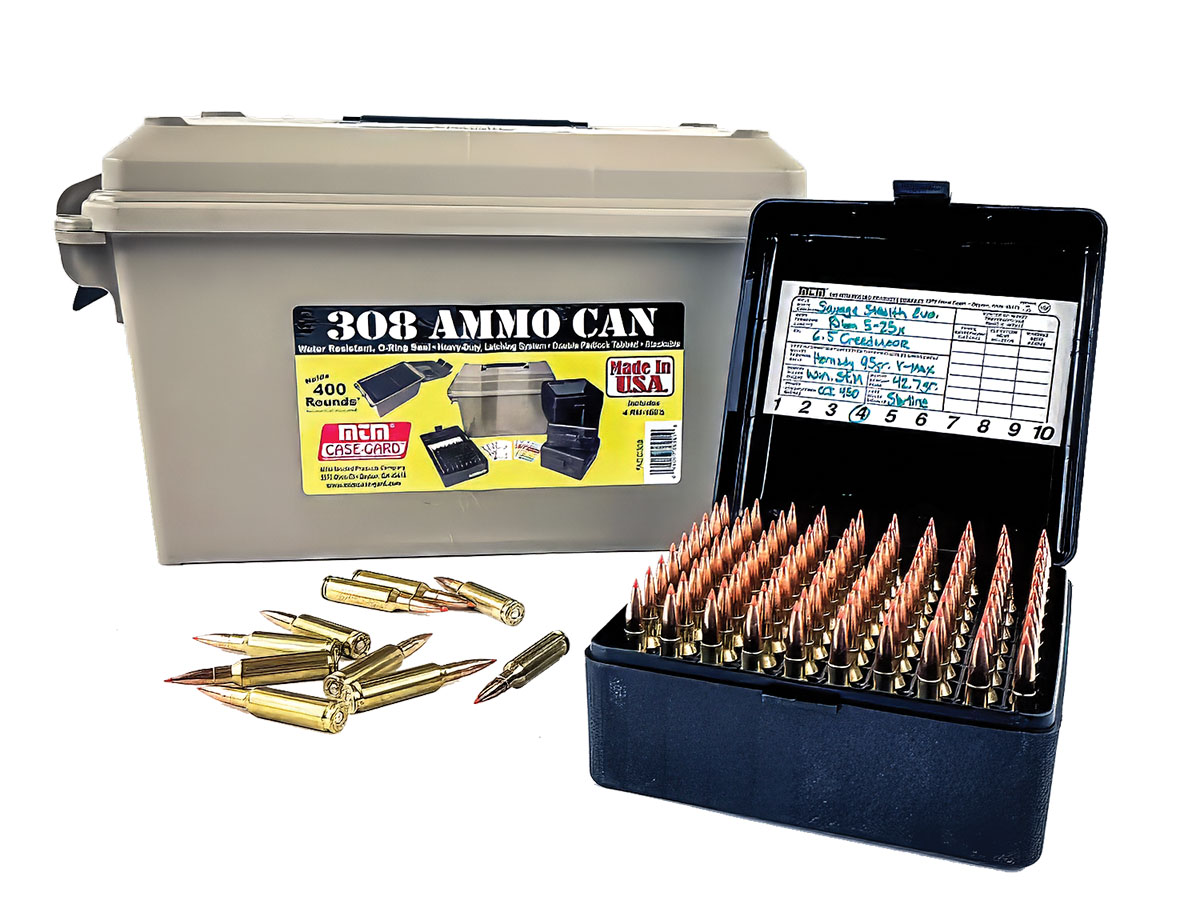
41.2 grains, with a maximum charge of 45.3 grains. Starting from the low end and working upward in 0.3-grain increments, I found that using 42.7 grains of powder produced the tightest group, with a velocity of 3,224 feet per second (fps). It’s important to resist the urge to declare a particular charge the best-performing just because it produces a single, tight group. If you’ve been handloading long enough, you’ve likely experienced a promising group during the load development process open up after shooting a few more rounds. Repeatability is key, so after rolling off another 50 rounds, it was time to head back to the range. Once it was all said and done, it was confirmed that 42.7 grains was the magic number, which gave me the green light to load what was needed for the hunt.
Prairie dog hunting is unlike most other types of hunting in that an active town can provide an almost nonstop stream of targets. Fifty rounds may sound like plenty when heading to the range to check a zero and shoot a few groups. Still, it can disappear surprisingly quickly when prairie dogs pop up at several distances. Loading 500 rounds was admittedly a substantial undertaking. By that point, experimenting with different powder charges was finished. I wasn’t changing components or searching for another combination that might shave a fraction of an inch from a group. The goal was to duplicate the load that had already proven itself and arrive in Wyoming with enough ammunition that I wouldn’thave to ration shots when the action picked up. With three rifles along for the trip, the Creedmoor wouldn’t be doing all the work, but I wanted enough ammunition on hand should we run into more than we bargained for.
Before leaving for Wyoming, I also spent some additional time building a DOPE card so that I’d have a good idea of what to expect when I arrived. When traveling for a hunt, it’s important to know the elevation at which you did your original testing, as well as what elevation you’ll be at on the hunt. As your elevation changes, so does the density of the air. At higher elevations, the air is thinner, and thus there’s less pressure, leading to bullet impacts higher than you experienced back home. With this knowledge and the fact that we’d be jumping from approximately 515 feet above sea level to around 5,150 feet, I ensured I’d have time to confirm zero and make any necessary elevation adjustments before go time.
The terrain itself made the differences between shooting at an established range and varmint hunting immediately apparent. In Wyoming, the targets weren’t neatly arranged at 100-yard intervals, and they certainly weren’t interested in staying put while I adjusted for wind or elevation. Prairie dogs could appear almost anywhere, requiring us to constantly range new targets and pay attention to
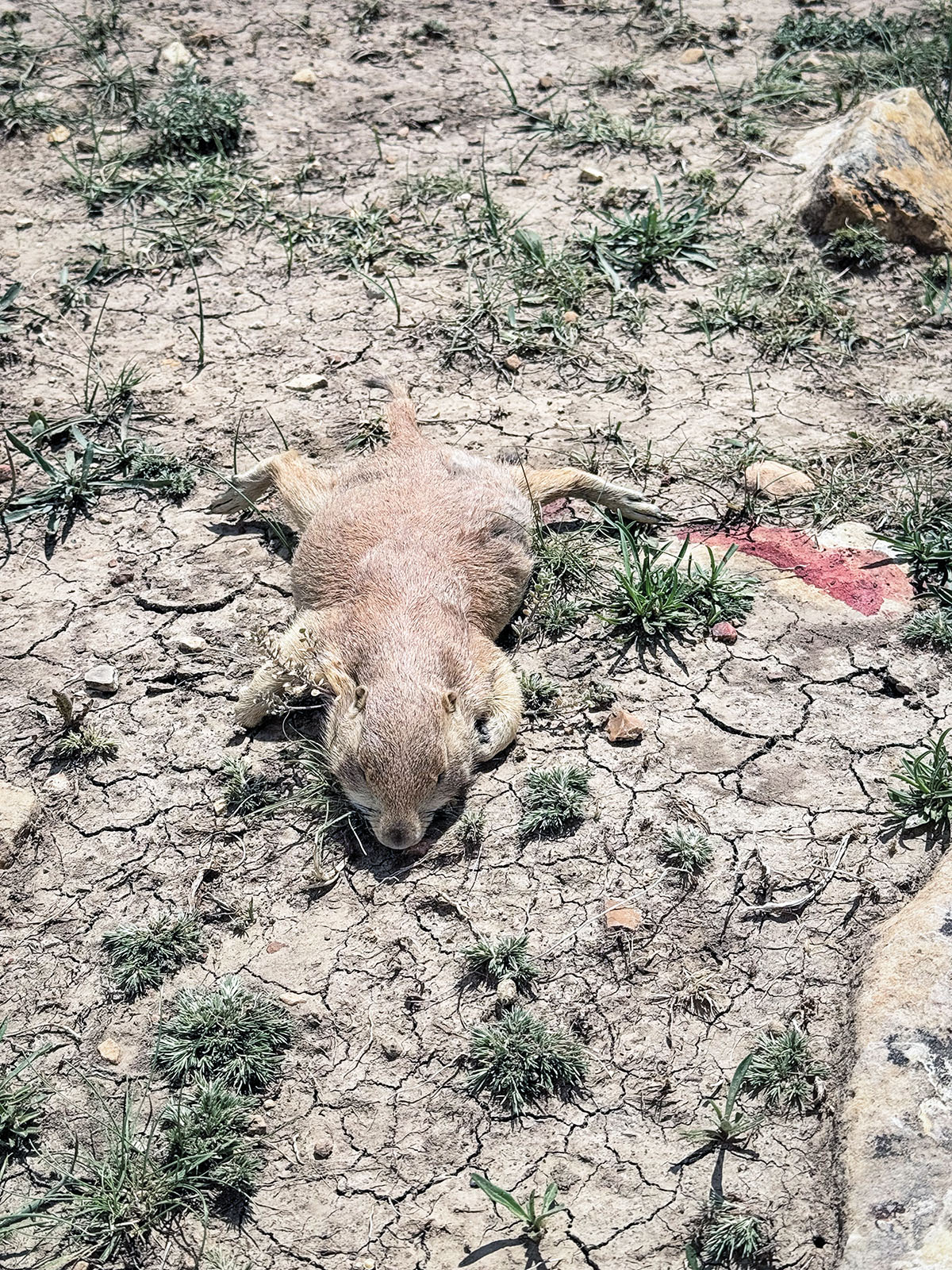
what the wind was doing between the rifle and the animal. Another lesson learned became apparent as the day went on: a prairie dog setup isn’t judged by a few good shots, but rather by the course of dozens (if not hundreds) of opportunities, combined with the shooter’s ability to adapt on the fly. Quick work was made on any prairie dogs within 400 yards, with the wind challenging accuracy out to 500 yards and beyond, making good wind calls ever so important. At moderate distances, the 95-grain V-MAX load made the Creedmoor easy to work with,
but pushing shots much farther out brought wind reading increasingly into play. That was especially true when a gentle breeze turned into sustained winds pushing 25 miles per hour (mph), or even random gusts upwards of 30 mph.
Those conditions ultimately made the hunt a much better test of the load than a calm day ever could have. Connecting with a prairie dog several hundred yards away was satisfying, but watching misses was equally educational. Wind that seemed relatively insignificant at the shooting position could move a bullet enough to turn what looked like a good hold into a clean miss. Corrections had to be made quickly because, unlike steel, a prairie dog wasn’t obligated to remain above ground for another shot. That combination of small targets, constant changes in distance and shifting wind gave our gun and ammunition a workout very different from the long-range target shooting I had previously done. It also proved exactly why I had chosen a rifle I already knew so well. Instead of thinking about the gun, I could concentrate on reading conditions, making corrections and making hits on our furry little targets.
There’s a certain satisfaction in finding another use for a rifle that is already sitting in the safe. My Stealth Evolution had already proven itself to be a capable long-range rifle long before this project began, which is exactly what made me want to try something different with it. Developing a prairie dog load required a different approach to component selection and a commitment to gathering DOPE at varying distances and under varying conditions. Still, the result was a combination I could take to Wyoming with confidence. More importantly, the hunt reinforced something easy to forget when we’re constantly looking at the newest rifles and cartridges to hit the market: Sometimes the most interesting project isn’t buying another rifle. Sometimes it’s discovering that the rifle you already own can do a job you never expected it to do.