

FERAL HOGS
The Ultimate Varmint Destruction
feature By: Shane Jahn | November, 26
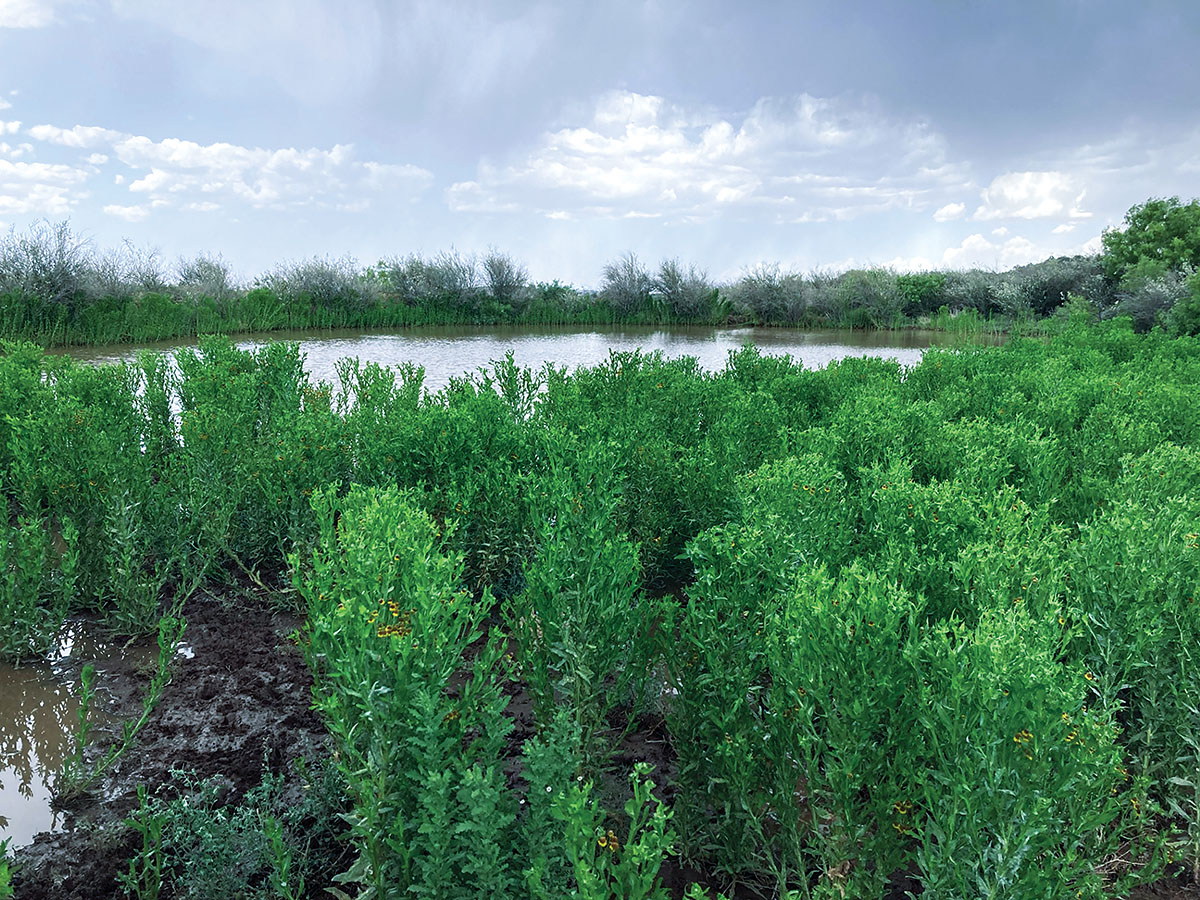
For the past few months, I’ve started seeing an increasing amount of feral hog sign at my deer feeder out here in far west Texas. It sits above a brushy, dry wash that is choked full of catclaw acacia and white brush that protrudes into the narrow arroyo from each bank. It’s difficult for a man to navigate. When I have done so, I emerge scratched and bleeding from the appropriately named catclaw. To many, this high desert country doesn’t look like typical hog terrain. The fact that they are here shows us how adaptable these critters are. The states containing feral hog populations listed deeper in this feral exposé display just how adaptable they are. They are found on our borders with Old Mexico and Canada, and as you will see, many places in between.
There are even reports of Canadian “super pigs” on the northern border that follow Bergman’s Rule. This means the hogs up there have larger bodies to better equip them to handle extreme cold and can survive the harsh winters by burrowing tunnels into the deep snow. These hybrids of feral hogs and domestic pigs are said to reach 600 pounds. That’s a lot of Canadian bacon!
I was deep in the Chinati Mountains south of Marfa one day before I retired from the Border Patrol. While negotiating a steep hillside and looking for foot sign of illegal aliens, I came across an area of uprooted soil where something had rolled large rocks out of the way to get to whatever it was eating below the surface. For a minute I pondered what could have done it, then it clicked. Feral hogs! I’ve seen them on the arid desert floor near the Rio Grande and all the way up into the high elevations of the Davis Mountains where Rocky Mountain Ponderosa Pines tower over the rugged landscape.
The feeder I mentioned was erected to introduce my young grandson to wildlife and outdoor activities. He loves riding in my UTV, and I let him “drive” by sitting on my leg while he navigates the ranch road. He’s only four years old, and this is a big deal for him, as is seeing the mule deer that routinely visit the feeder for a little extra grub. In truth, I had no intention of killing a deer on our small place, but I reckoned hogs would eventually find the corn and they might offer a little extra hunting opportunity.
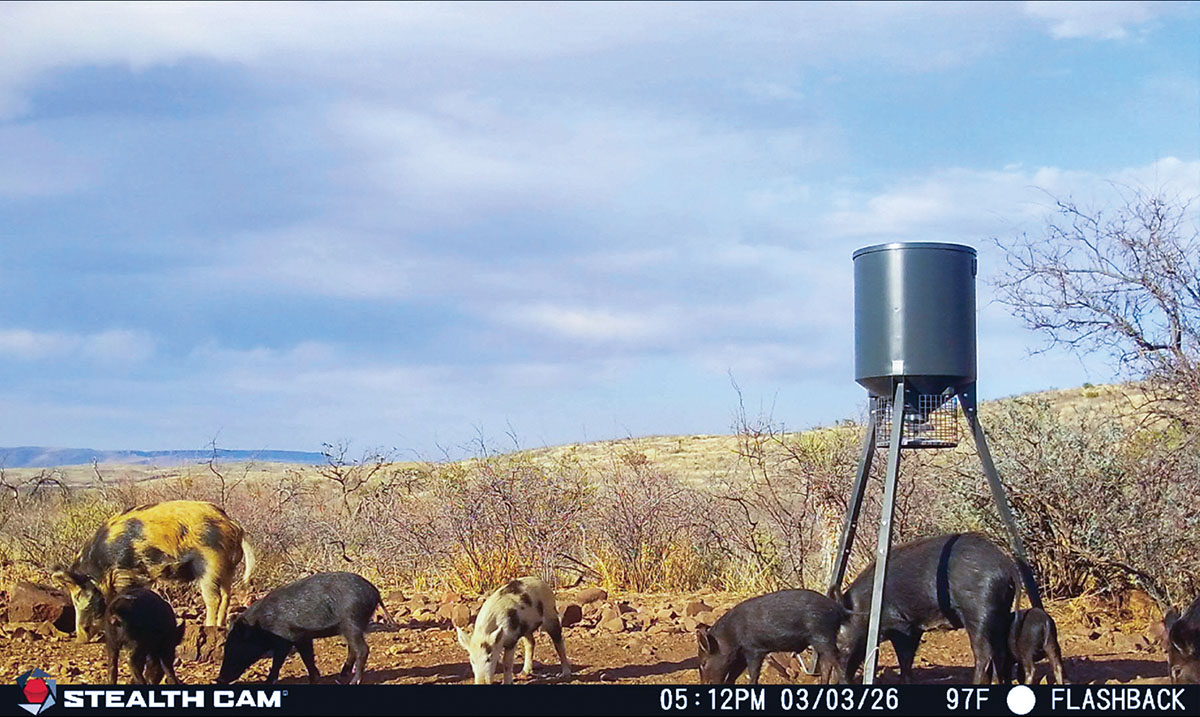
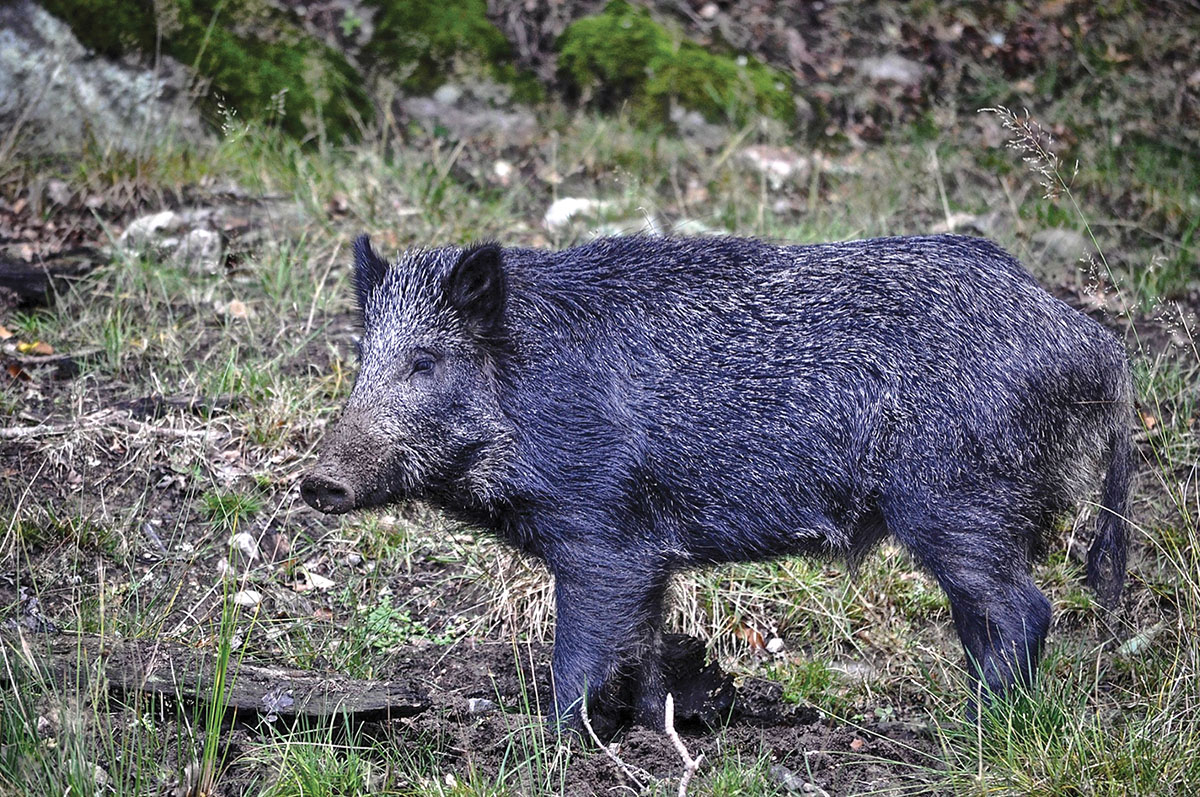
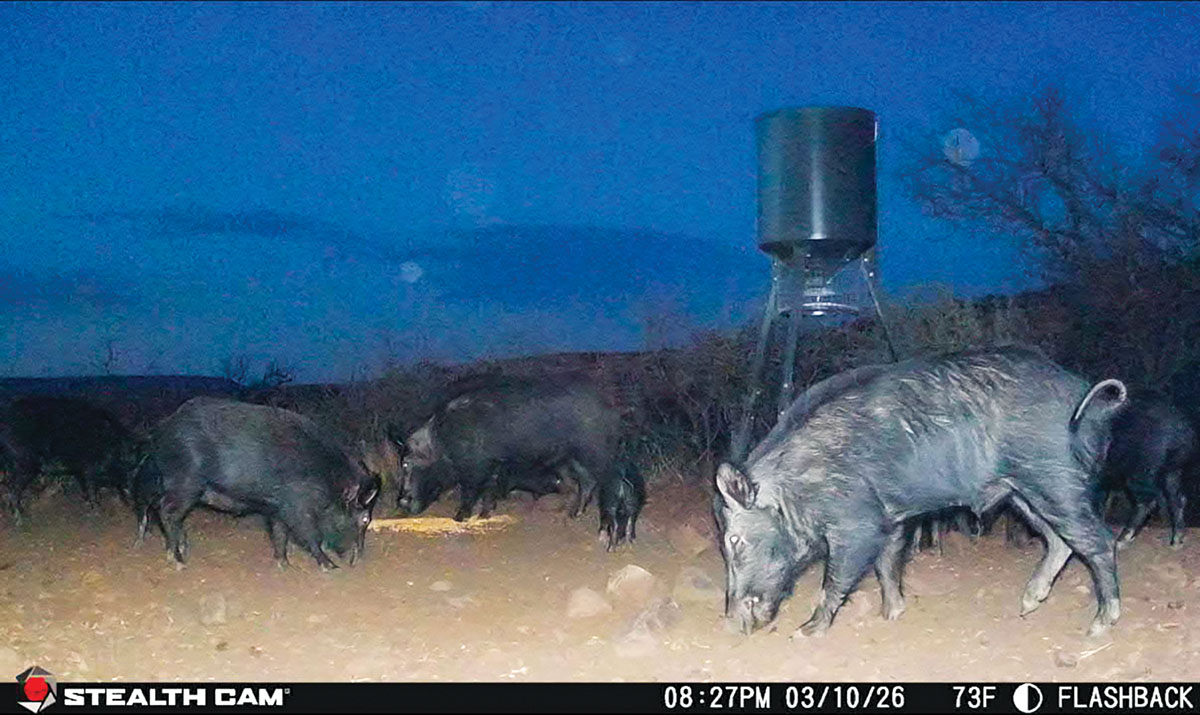
I’ve seen feral hogs in the area occasionally, but I had no idea there were so many different groups around until I installed a game camera. Boars, old sows, shoats, tiny piglets and an entire variety pack of feral swinery are hitting the camera. The rocks around the feeder have been pushed into small piles by the pigs rolling them out of the way to get to the corn on the ground. Ah, but there was one that commanded my complete attention. A big, black, muscular boar with thick tusks protruding from his snarling lips. Photos indicated a classic profile of a razorback dorsal ridge above his heavy shoulders.
Before installing the camera, I saw an old sow with small pigs at the feeder early one morning. After the trail cam was installed, however, the only hog activity captured for a while was in hours of darkness. I think this was by chance; I don’t believe the new camera had anything to do with it. Then, one afternoon, a full two hours before dark, my cell phone started sending camera activation tones. It’s sensitive enough to pick up passing doves, and I assumed that’s what I would see, or possibly some mule deer. Lo and behold, a dozen porkers were busy chomping corn. I grabbed a rifle and headed out to try and collect some wild pork. Within 15 minutes, they had cleaned up the corn and departed for unknown parts before I arrived. Not wanting to spook them from the area, I poured some corn on the ground and backed out. Sure enough, after dark the big boar appeared. I had no artificial light for shooting under such conditions, but I seriously started considering buying one. The camera had shown that the hogs were going to be tough to pattern.
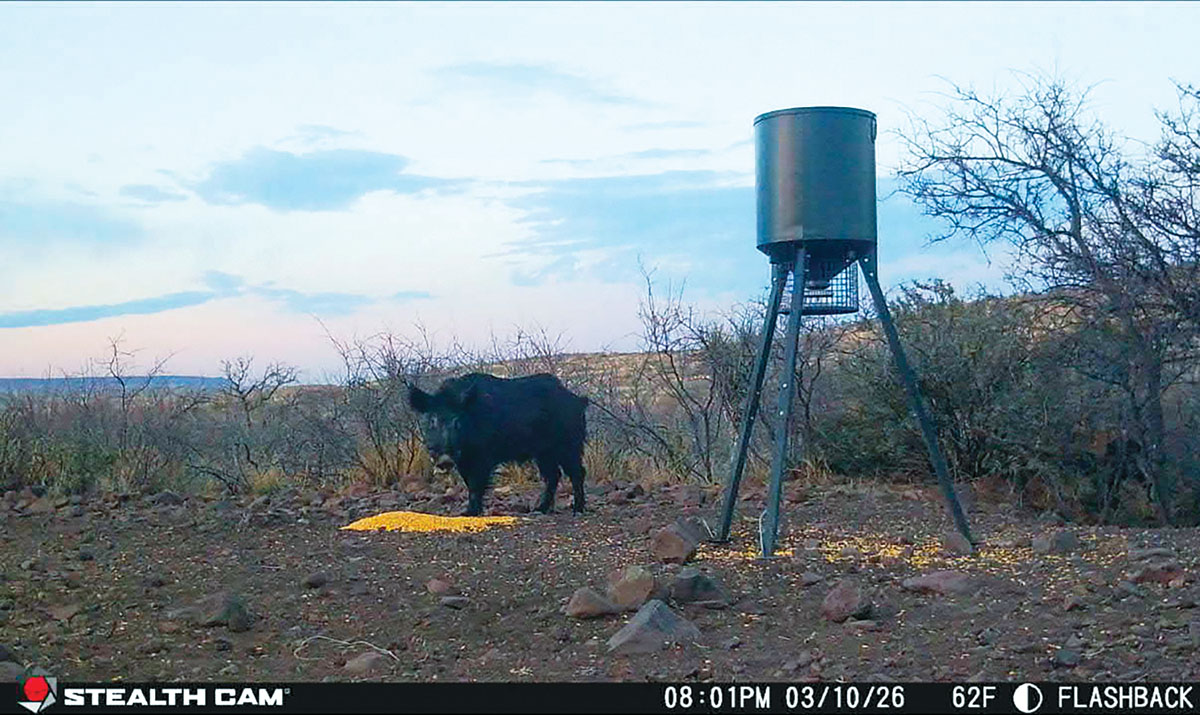
The next day, the boar triggered the camera at dusk, but I wasn’t there. In the days that followed, I perched on the hillside behind a big boulder that offers a perfect rest for handgun or rifle at a measured 44 yards from the feeder. Pictures show the boar usually arriving one to two hours after sunset, but some nights it was much later. The big boar was hitting the camera every night at various times, and it became apparent I would probably need to hunt him in the dark if I was going to get a shot. Have you ever noticed the harder something is to come by, the more you want it? I ordered a light to mount on the scope of my suppressed Remington Model 700 in 7mm-08, just in case. Now I just needed Ol’ Big, Black and Bristly to arrive when I was there. I contemplated making a stalk once the camera told me he had arrived, but the ground is too rocky for me to walk in on him in the dark. Believe me, I tried walking off that hill in the dusk after sitting there until sunset. It was a stumbling chore. I had to be there waiting and ready when he showed up.
The U.S. Department of Agriculture’s Feral Swine Populations map shows that hogs are found in nearly all of the states of California, Texas, Oklahoma, Arkansas, Louisiana, Mississippi, Alabama, Georgia, Florida and the Carolinas. They also appear in parts of Oregon, Nevada, Utah, Arizona, New Mexico, Kansas, Missouri, Kentucky, Tennessee, Ohio, West Virginia, Pennsylvania, Virginia, Michigan, North Dakota and New Hampshire. That map is from 2024, so it’s likely hogs have expanded their ranges since then. A quick search indicates there are 6 to 9 million feral hogs in the United States with growing and expanding populations across 35 states. By comparison, a similar search says there are right at 3 to 5 million coyotes in the U.S. No matter how you cut it, we have a lot of wild hogs.
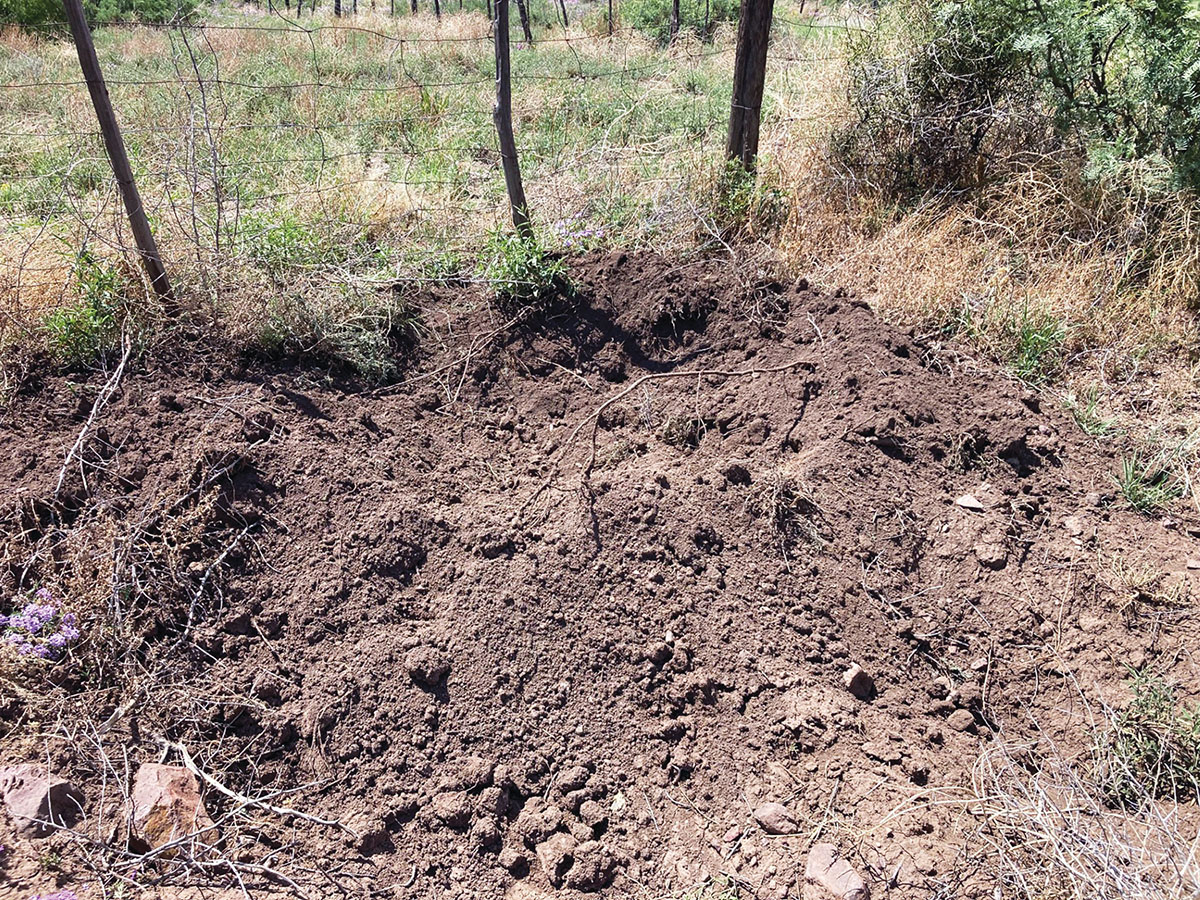
As the old saying goes, there are two kinds of places when referring to feral hogs. Those that have ’em and those that will. My home state of Texas estimates there are roughly 2.6 million feral hogs here, and they can be found in just about every county throughout this huge state. Hogs account for $871 million in economic damages and related expenditures each year in the Lone Star State alone. That number rises to $1.6 billion nationwide.
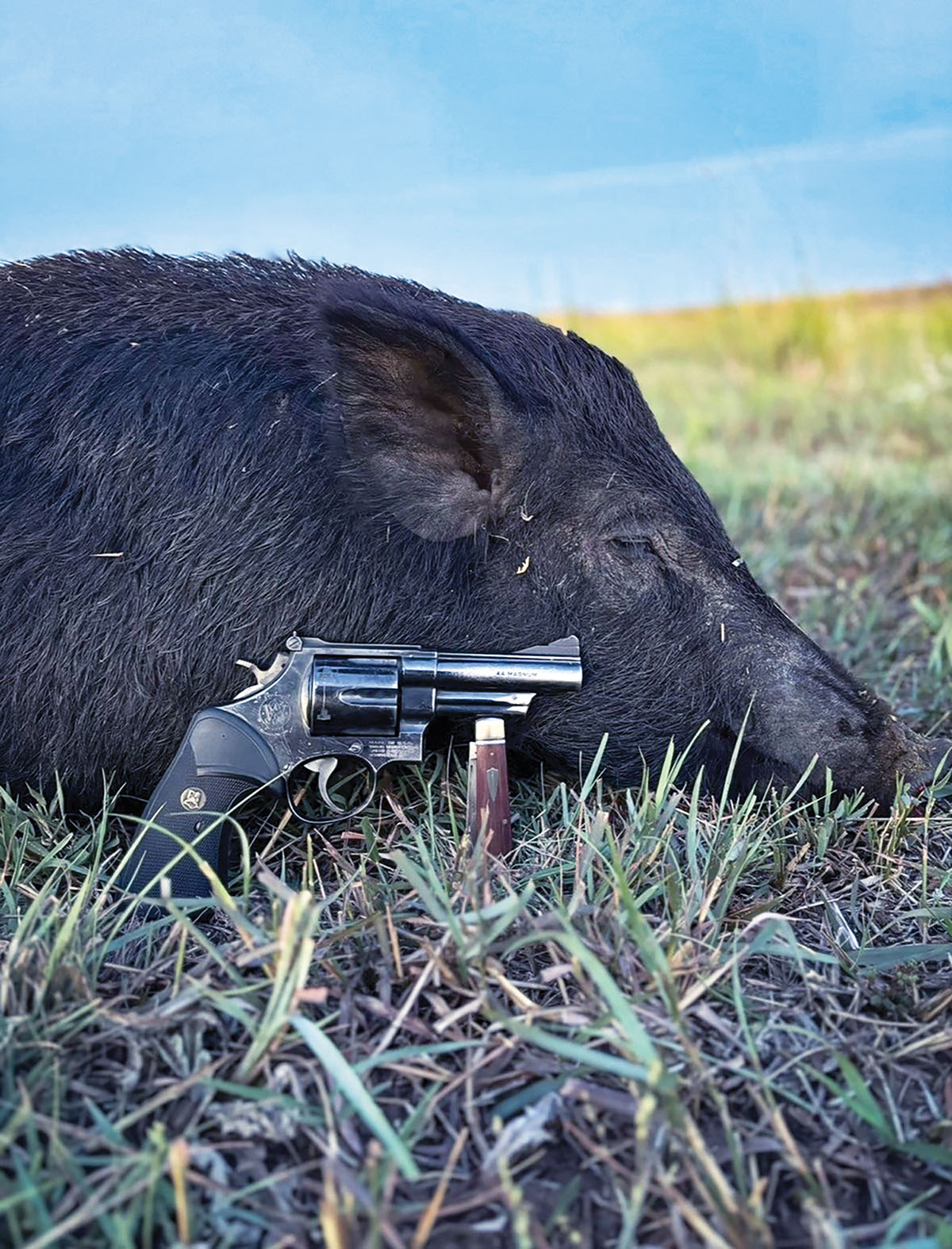
This is where hunters can step in to help. We might not be able to adjust the numbers drastically, but we can surely do our part in trying to keep the population in check while having fun and collecting some pork for the barbecue pit at the same time. Hunting feral hogs can be a great hunting adventure and provide unique trophies in the way of European mounts, tusks, and heck, we all need at least one big boar’s head mounted on the wall.
Feral hogs are intelligent. It’s said they are at least as intelligent as some breeds of dogs. One study stated that the wild hog’s cognitive ability is on par with that of a three-year-old child. Let that sink in for a minute. Kids that age can run an iPad better than some adults. I can attest that they are smart animals, and I expect anyone with a little hog hunting experience will agree. An old friend of mine and I hunted hogs religiously when we were in high school and college. A fact I’m sure was reflected in our GPAs. We loved stalking them in the brush and were quite successful at it. We also whacked many a pig from stands and feeders. Hitting them at the feeders worked a time or two, but after a couple affiliates of the sounder fell to the roar of rifle fire, the remaining members of the clan wouldn’t show their extended snouts during daylight hours for a long time. It seemed they knew to only walk into the open after dark.
A big hog is a tough animal, especially larger boars. Prolonged fighting amongst the males produces scar tissue on their shoulders from the healing of cuts made from their sharp tusks, and they naturally have thicker hide covering their shoulder area. A hunter is not overgunned by toting some of the biggest cartridges to the field for feral hogs, especially big ones. The main thing to consider is using a good bullet designed for penetration. When in doubt, a carefully placed shot at the base of the ear will settle the hash of the surliest swine. Back in the day, my buddy and I killed a lot of hogs with our rifles chambered in 22-250 Remington and 220 Swift.
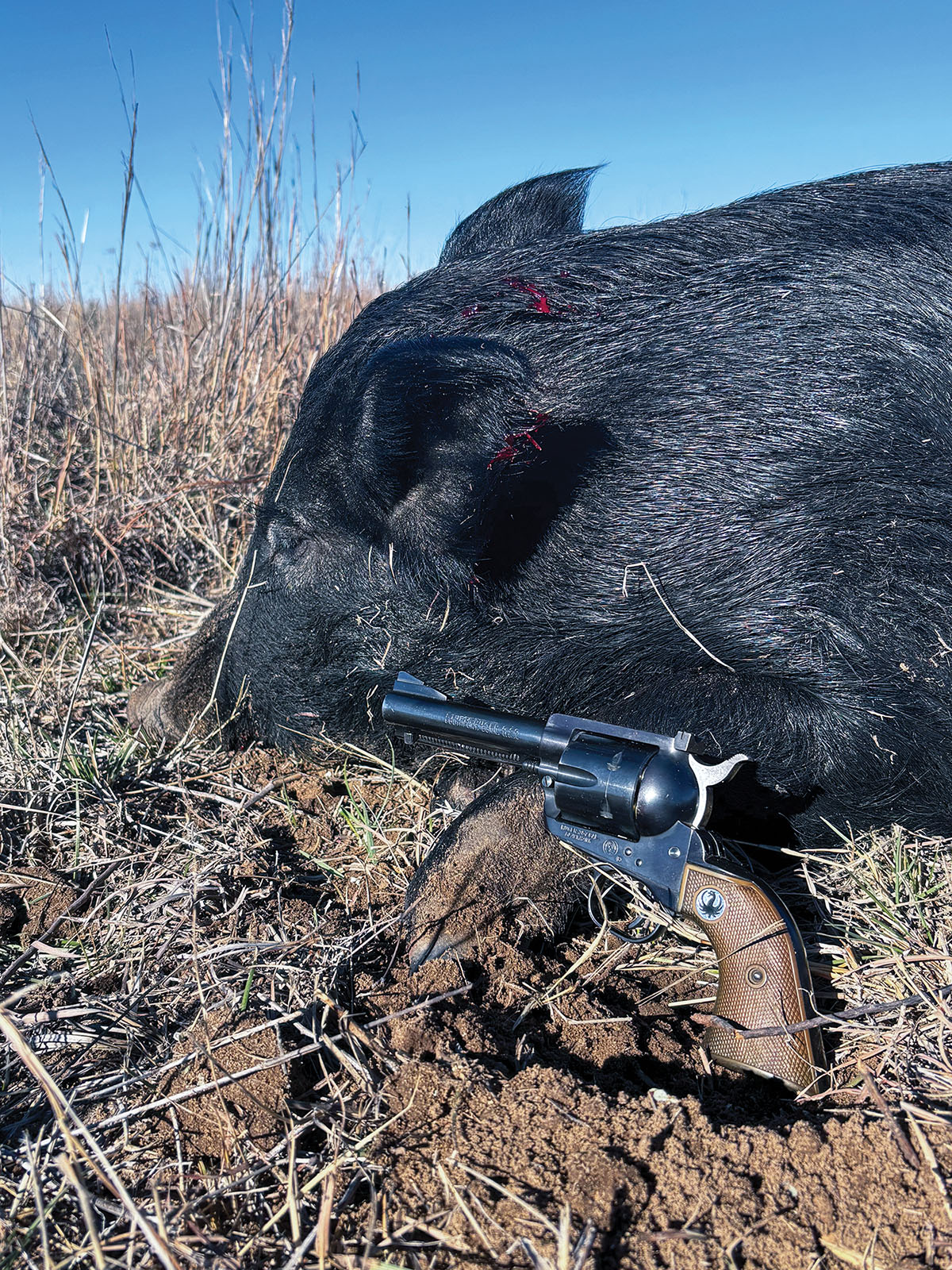
That’s what we had, so that’s what we used. Those precision base-of-the-ear shots and even a few lung shots worked fine on hogs of varying sizes. I don’t recall ever losing one with those fast .22s. One of the biggest boars I’ve collected was shot at close range while still hunting with a 220 Swift round in the lungs. Once we were able to acquire bigger rifles, we left the .22 calibers at home, though. The small cartridges work if everything goes right. Hunt long enough and you realize that is not always the case. I have lost a couple of large hogs with shoulder shots from what I’d consider more appropriate cartridges like the 30-30 Winchester from a lever gun and a stout 44 Special from a revolver.
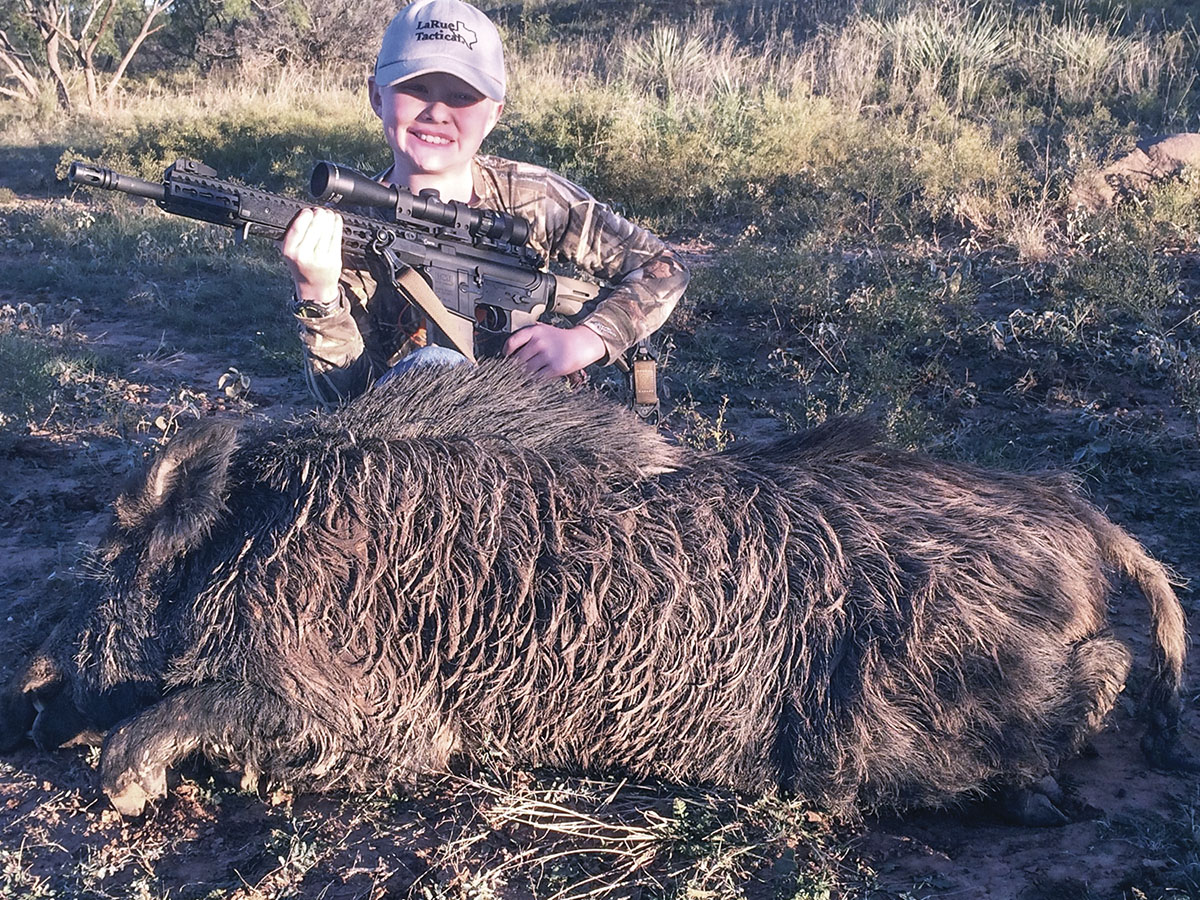
I can’t say as to what happened, of course, but the hogs were hit and not found. Sometimes the large ones will not bleed much, or at all. Lack of blood combined with the thick vegetation where hogs often roam can make trailing a wounded pig difficult. Most often, hog tracks are everywhere, so following the correct track can be difficult. Heavy-for-caliber bullets designed for penetration are optimal for putting them down quickly. A feral hog, especially if wounded or cornered, can be dangerous, so keep that in mind if you trail one into the thickets. Those tusks that lacerate the opposing swine’s thick hide will have no trouble cutting human flesh.
Feral hogs are hunted in a variety of ways. I’ve already mentioned still hunting and baiting. Others include hunting the nocturnal pigs with the aid of a light or thermal optics. Hunting safari style is an option by riding in the raised seat in the back of a pickup or UTV, where they are either shot from the vehicle (where legal) or the hunter unloads for a bit of spot-and-stalk action once the pigs are in sight. Dogs are used in some places to bay and even catch hogs. Hunters step up for a close shot once the canines are clear. Some folks even run in and stab the hog with a big knife. I’ve not yet hunted hogs with dogs, but I’d like to. Aerial shooting from helicopters has also become very popular in places.
Water sources are always a good starting point when hunting hogs. Obviously, they must drink. They also need moisture to regulate body temperature during warmer months. Swine lack functional sweat glands, so they seek out precious water to cool themselves by wallowing in the mud. When it’s hot, they lie in the shade and conduct their foraging nocturnally or in the cool of the morning and late evening. In cold conditions, they prefer deep cover for warmth and move more in daylight hours. There is a surprising amount of research information on the feral hog on the internet. Another worthwhile source of information is Richard B. Taylor’s good book, On Wild Hogs and Javelinas: History, Biology, Management, and Hunting. Taylor is a Wildlife Biologist. He points out that feral hogs can breed year-round and sows produce one to two litters per year. Litters range from 4 to 12 pigs, and those youngsters come of breeding age at six months. Once a hog gains in size, they have very few natural predators besides man. All of this enables hog populations to thrive, especially in favorable weather conditions.
Hunting feral hogs is one of the more affordable hunts available these days, depending on which method of hunting you choose. The price of admission for an hour or two of shooting from a helicopter in hog-infested areas can get you several days of more traditional styles of hog hunting adventures on other ranches. It all depends on what you’re looking for. A good hog hunt is a perfect way to introduce new hunters to the game, and that’s something we all should focus on. I’ve eaten hogs of all sizes. The meat is good if it is cooled quickly and properly handled. Feral pork makes good table fare and has even found its way onto the menus of fine restaurants. It’s advised to wear disposable gloves during field dressing and butchering, as they can carry a variety of diseases. This is something I try to do when handling any wild game. Always cook the meat thoroughly and keep it moist.
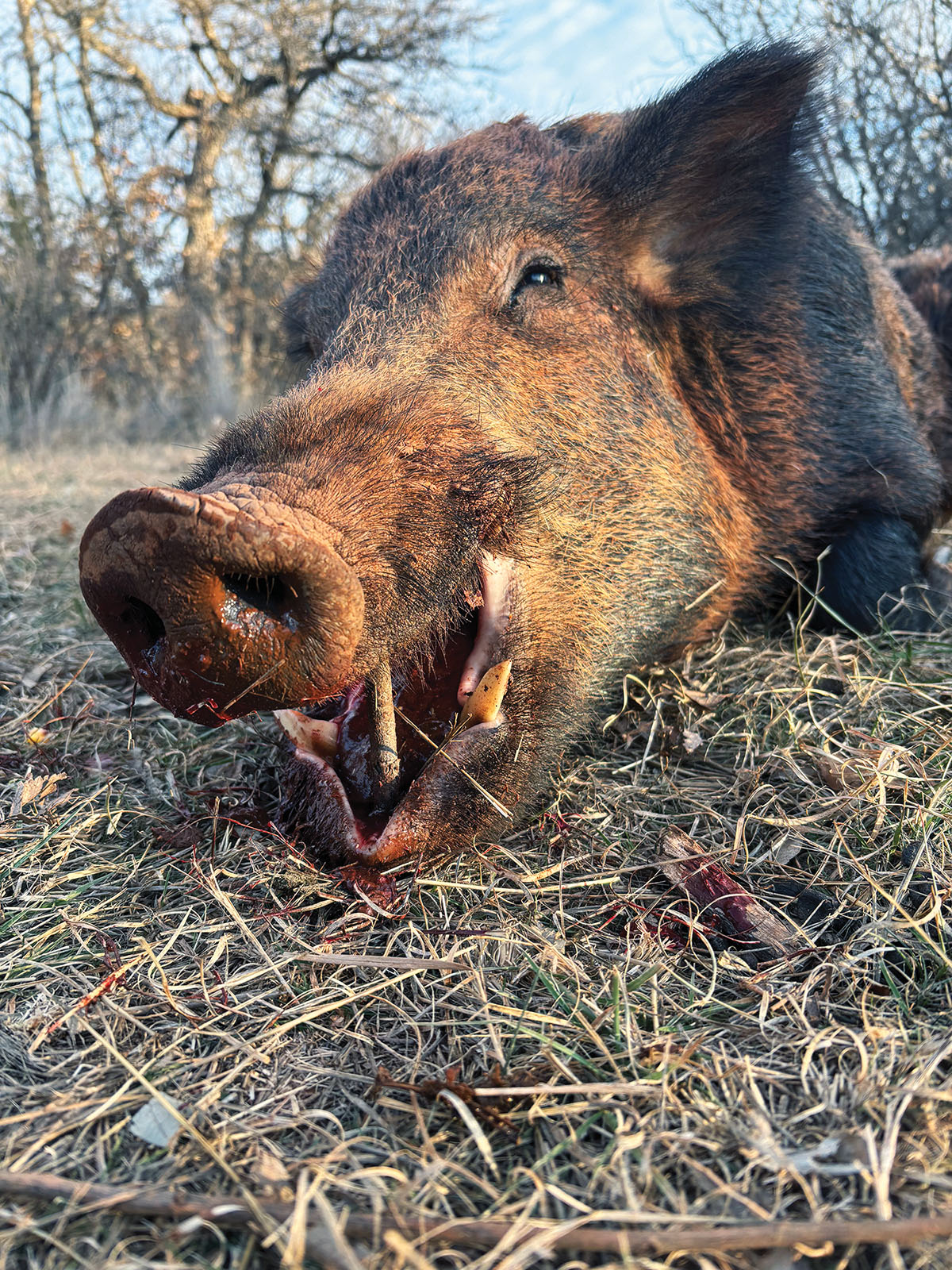
The numbers indicate we are in no shortage of feral hogs in this country. Feral hog proliferation is also a great way to utilize various firearms in the field. They are perfect for digging out classic lever-action rifles, handguns and archery equipment to put to work. I will soon have a Pedersoli double rifle on the way, chambered in 44 Magnum. It should be perfect hog-stalking medicine. Singling out big boars while trophy hunting adds challenge and a bit of danger to the mix. My friends Larry Weishuhn and Luke Clayton even penned a book titled Poor Man’s Grizzly, referring to the size and tenacity of the formidable boars.
Pick a method and plan a hunt; you might find it to be your new favorite pastime in the field. Those of you who already hunt in hog country know the extra and exciting hunting opportunities they provide. You’ll also be providing a service to farmers and ranchers by removing a few of the root-plowing porkers from the ecosystem.
Speaking of hunting. A game of cat and mouse ensued, or hunter and hog, if you will. When I hunted in the evening, the sought-after boar would show up after dark. A painted boar of mottled colors started hitting the camera as well, along with another big, black one. It appeared these boars often traveled solo and gave one another ample space in front of the camera. Oftentimes the boars arrive first, followed by an assortment of other hogs of various sizes. On the evenings I didn’t hunt, they would show up at sunset with plenty of shooting light available through my scope.
As I write this, the past two days have seen the atrocious winds West Texas is known for. I expected an evening hunt in the gusty winds would be fruitless the afternoon before last, so I didn’t go. Yep, right before dark the boar triggered the camera. Yesterday’s winds were even worse, with dust obscuring the mountains to the north. I wasn’t going to miss another daylight opportunity at this hog if I could help it, so I sat behind the boulder a couple hours before dark and waited. A doe and yearling mule deer provided an enjoyable afternoon as I watched them eat corn, and a covey of blue quail walked within four steps of me as they made their way to roost for the night.
As shooting light faded, I expected the boar had once again bested me. Not to worry, my scope light was due for delivery. Then, movement from the west caught my attention as a dozen hogs marched in unison for the corn. The big boar was not with them, although a couple of up-and-comers were. They swarmed the feeder. I was content watching them as there wasn’t anything there that I was interested in taking. The other black boar I had been seeing was with the sounder, but he was shielded by an equally big sow and pigs, and I couldn’t have shot him if I had wanted. Right before dark, the big guy swaggered in from the same direction the others had come.
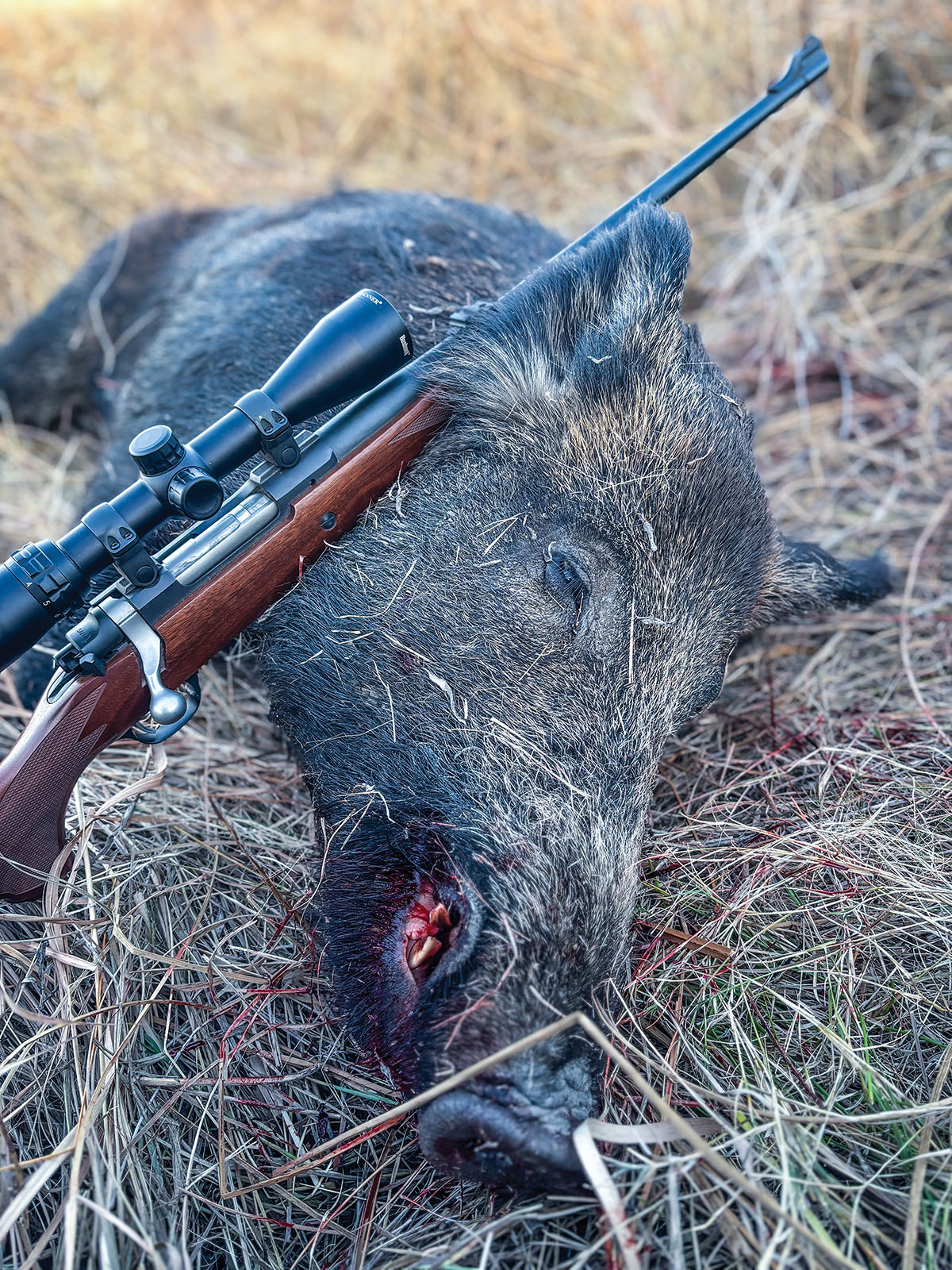
There was no need to look him over with my binoculars; this was the big boar I was waiting on. As he entered the scene, the others immediately gave way, and as soon as he stopped, I steadied the crosshairs and my Ruger No.1 on the base of his ear just a tad towards the shoulder and pressed the trigger. The little 243 Winchester let out a flash of fire and the big hog dropped in his tracks. This older load of Hornady’s Outfitter Ammunition is topped with the 80-grain GMX bullet. Their latest Outfitter load uses the CX bullet, and I expect it will get the job done just as well. The GMX fully penetrated and exited the boar, breaking his neck perfectly. In fact, when I removed his head for a skull mount after butchering him, I simply had to cut the heavy hide and muscle. The neck bone was completely shattered. Remember, when in doubt, hit these big boars below the ear.